 Business License

BeagleBone Black: PRU Real-Time I/O for Industrial Control
By QIXINWEI | BeagleBone Black | TI Sitara AM3358 | Industrial SBC
Key Takeaways
The BeagleBone Black is a credit-card-sized Linux computer built around the TI Sitara AM3358 processor, and its defining feature is not the 1GHz ARM core. It is the two Programmable Real-Time Units (PRUs) inside the same chip, which give the board deterministic, cycle-accurate control of its I/O pins that Linux alone cannot provide.
Each PRU is a 32-bit RISC microcontroller running at 200MHz, executing most instructions in a single 5-nanosecond cycle with no pipeline, no cache, no interrupts, and no scheduler. That determinism is what lets one small board generate precise stepper motor pulses for CNC machines and 3D printers, count encoder pulses without missing any, and bit-bang communication protocols in software.
On paper the BeagleBone Black looks weaker than a Raspberry Pi: a single 1GHz Cortex-A8 core and 512MB of RAM against a quad-core Pi with gigabytes of memory. In practice it wins wherever timing matters, because the PRUs handle the real-time work while Linux handles the networking, the user interface, and the application logic.
The board ships with Debian Linux pre-installed on 4GB of onboard eMMC flash, 65 GPIO pins on two 46-pin headers, seven 12-bit analog inputs, 10/100 Ethernet, USB host, and micro-HDMI.
QIXINWEI supplies original TI Sitara AM3358 processors and BeagleBone Black boards, with bulk supply and BOM matching for production volumes.
The Problem Linux Cannot Solve
A single-board computer running Linux is a powerful thing, but it is a bad clock. Linux is a general-purpose operating system: it schedules dozens of processes, services interrupts, and manages memory, and none of that happens on a fixed schedule. A user-space program that tries to toggle a GPIO pin every 10 microseconds will sometimes do it in 9 and sometimes in 50, because the kernel may preempt it at any moment. For a web server or a media player that jitter is invisible. For a stepper motor it is a lost step, a ruined part, or a crashed print.
The usual workarounds all cost something. A real-time Linux kernel patch reduces the jitter but does not eliminate it, and it adds maintenance work every time the kernel is updated. An external microcontroller offloads the timing, but then the design has two chips, two firmwares, and a communication link between them. An FPGA solves the timing problem completely, but it is expensive and it takes a different skill set to program.
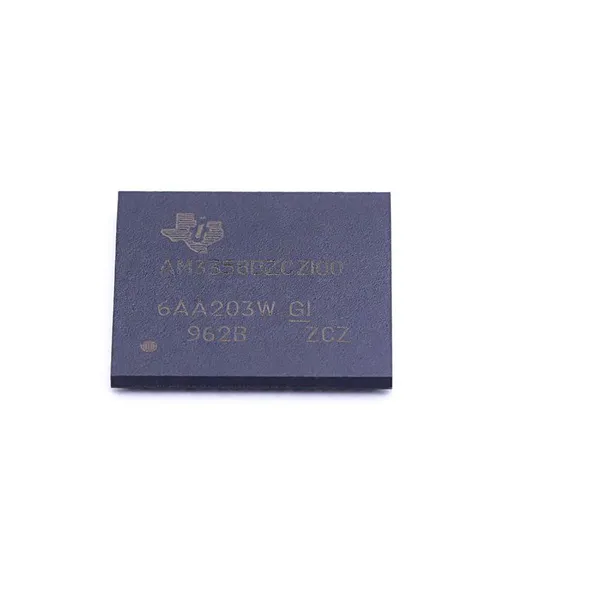
The BeagleBone Black solves the problem inside a single chip. The Sitara AM3358 contains the ARM processor that runs Linux, and alongside it, two independent PRUs that run their own firmware at 200MHz. The PRUs are not affected by anything Linux does. They keep running, on time, while the ARM core is busy serving a web page or writing to the SD card. The application splits naturally: the PRU owns the timing-critical signals, and Linux owns everything else.
What the PRU Actually Is
A PRU is a small 32-bit RISC microcontroller built into the AM3358 silicon. There are two of them, PRU0 and PRU1, forming the PRU-ICSS subsystem. Each one runs at 200MHz, so most instructions execute in a single 5-nanosecond cycle. There is no pipeline, no branch prediction, no cache, and no interrupt system to disturb the timing. When a PRU program says a pin changes state after exactly 200 cycles, it changes state after exactly 200 cycles, every time.
The PRUs have direct access to a subset of the board's GPIO pins through two special registers. Writing to the output register flips a pin in a single cycle, and reading the input register samples a pin with the same precision. The PRU and the ARM core communicate through shared memory, so Linux can hand the PRU a new set of parameters, for example a new stepper speed, and the PRU applies it without missing a beat.
PRU firmware is written in C or assembly using TI's PRU Software Support Package, and in current Debian images the PRUs are managed through the Linux remoteproc framework. The learning curve is real: the PRU has its own instruction set, its own memory map, and no operating system underneath it. But the payoff is a board that behaves like a microcontroller and a computer at the same time, with no extra chip on the bill of materials.
PRU cores: 2x 32-bit RISC, 200MHz each
Instruction timing: Most instructions execute in one 5ns cycle
Determinism: No pipeline, no cache, no interrupts, no scheduler
GPIO access: Direct pin control through R30 (output) and R31 (input) registers
Memory: 8KB instruction memory and 8KB data memory per PRU, plus 12KB shared memory
Programming: C or assembly, TI PRU Software Support Package, remoteproc/RPMsg under Linux
BeagleBone Black Key Specifications
Processor: TI Sitara AM3358, ARM Cortex-A8, 1GHz, up to 2000 DMIPS
Co-processors: 2x PRU 32-bit microcontrollers at 200MHz, NEON floating-point accelerator, PowerVR SGX530 3D graphics
RAM: 512MB DDR3/DDR3L
Storage: 4GB eMMC onboard flash with Debian Linux pre-installed, microSD card slot
GPIO: 65 digital I/O pins on two 46-pin headers (P8 and P9)
Analog inputs: 7 channels, 12-bit ADC, 1.8V maximum input
PWM outputs: 8 channels
Serial interfaces: 4x UART, 2x I2C, 2x SPI, 2x CAN, USB host, USB device
Networking: 10/100 Ethernet
Display: Micro-HDMI
Power: 5V DC barrel jack or USB, around 2W typical
Board size: 86mm x 53mm, credit-card size
What the PRU Makes Possible
The PRU is not a theoretical feature. It is the reason the BeagleBone Black has survived for more than a decade in industrial and maker designs while faster boards came and went. These are the applications where it earns its place.
CNC machines: Machinekit, the BeagleBone port of LinuxCNC, uses the PRU to generate step and direction pulses for stepper motors with nanosecond-precise timing. A 3-axis mill or router driven by a BeagleBone Black needs no separate motion controller card. The PRU produces the pulses, Linux runs the G-code interpreter and the web interface, and the whole controller fits on one board.
3D printing: Klipper firmware can run its host software on the BeagleBone Black while the PRU handles the time-critical step generation. The result is a printer controller that stays accurate at high speeds and high microstepping rates, where a Linux-only board would start to jitter.
Robotics: Quadrature encoder counting is a classic PRU job. A spinning motor can generate thousands of encoder pulses per second, and a PRU counts every one of them while Linux reads the totals at its leisure. The same pattern works for reading fast sensors, driving servo pulses, and closing control loops that need microsecond response.
Industrial gateways: The PRU can bit-bang protocols that the ARM core does not support in hardware, and it can do it with exact timing. Combined with the board's Ethernet port, CAN bus, and UARTs, the BeagleBone Black works as a protocol converter or data concentrator on a factory floor, translating between legacy fieldbus devices and a modern network.
LED and display driving: Addressable LED strips and parallel displays need strict pulse timing that Linux cannot guarantee. A PRU generates the waveform in the background while the ARM core decides what to display, which is why the BeagleBone Black shows up in large LED installations and signage.
BeagleBone Black vs Raspberry Pi: Which Board for Which Job
The BeagleBone Black and the Raspberry Pi are often compared as if they were the same kind of board. They are not. They solve different problems, and choosing between them starts with one question: does the design need deterministic timing?
Processing power: The Raspberry Pi wins. A Pi 4 or Pi 5 has a quad-core ARM processor and up to 8GB or 16GB of RAM, while the BeagleBone Black has a single 1GHz Cortex-A8 core and 512MB. For media playback, computer vision, or a desktop, the Pi is the right choice.
Real-time I/O: The BeagleBone Black wins. The Raspberry Pi has no PRU and no equivalent. Its GPIO timing under Linux jitters by tens of microseconds, which is fine for blinking an LED and fatal for a stepper motor. If the project needs precise pulses, the BeagleBone Black is the board.
Analog inputs: The BeagleBone Black wins. It has seven 12-bit analog inputs built in. The Raspberry Pi has none, so every analog sensor needs an external ADC such as the ADS1115.
GPIO count: The BeagleBone Black wins on usable pins, with 65 GPIO on two 46-pin headers, against the Pi's 40-pin header with 28 GPIO. The BeagleBone Black also exposes more hardware peripherals per pin, including CAN, extra UARTs, and PRU-controlled pins.
Community and software: The Raspberry Pi wins. Its community is larger, its software library is broader, and its camera and display ecosystem is richer. The BeagleBone Black community is smaller but focused, with deep expertise in industrial and real-time applications.
Longevity: The BeagleBone Black wins for products. It has been in continuous production since 2013 with the same pinout and the same processor, which matters when a design must stay buildable for years. The Raspberry Pi changes models more often, and each change can force a redesign.
A practical rule: choose the Raspberry Pi when the job is computing, media, or a general-purpose project with a large community behind it. Choose the BeagleBone Black when the job is controlling hardware on a schedule that cannot slip.
Getting Started with the PRU
Starting with the PRU is easier than it used to be, but it is still the steepest part of the BeagleBone Black. The board itself is simple: plug in a 5V supply, connect the USB cable, and the pre-installed Debian image boots with a web-based interface and a Cloud9 IDE. The PRU work begins after that.
The standard path is TI's PRU Software Support Package, which provides the C compiler, examples, and the remoteproc framework that loads firmware into the PRUs from Linux. A common first project is a PRU program that blinks an LED with an exact delay loop, then a program that generates a square wave at a precise frequency, and then a stepper pulse generator. Each step teaches one piece of the model: the PRU runs its own code, Linux talks to it through shared memory, and the two sides never interfere with each other's timing.
Two honest warnings belong here. First, the BeagleBone Black GPIO is 3.3V, and the analog inputs accept at most 1.8V. A 5V signal on any pin will damage the board, so level shifting is mandatory when interfacing with 5V logic. Second, the PRU is not a shortcut to real-time programming. It has its own instruction set, its own memory, and its own debugging tools, and a developer who has only used Arduino or Raspberry Pi should expect a learning curve of days, not hours. The reward is a skill that no other single-board computer teaches.
Looking Ahead: BeagleBone AI-64
For designs that outgrow the BeagleBone Black, the BeagleBoard.org Foundation offers the BeagleBone AI-64, built on the TI TDA4VM processor with dual 64-bit Cortex-A72 cores at 2.0GHz, a C7x DSP, 8 TOPS of AI acceleration, 4GB of LPDDR4 RAM, and 16GB of eMMC flash. It keeps the PRU tradition alive with two 6-core PRU units, so the real-time model carries over to a much faster board. The BeagleBone Black remains the right choice for cost-sensitive and timing-critical designs, while the AI-64 targets machine vision, robotics, and edge AI workloads that need the extra compute.
BeagleBone Black FAQ
What is the BeagleBone Black?
The BeagleBone Black is a credit-card-sized single-board computer from the BeagleBoard.org Foundation, built around the TI Sitara AM3358 processor with a 1GHz ARM Cortex-A8 core, 512MB of RAM, 4GB of eMMC flash with Debian Linux pre-installed, and two Programmable Real-Time Units for deterministic I/O control.
What is the PRU on the BeagleBone Black?
The PRU, or Programmable Real-Time Unit, is a 32-bit RISC microcontroller built into the AM3358 chip. The BeagleBone Black has two PRUs, each running at 200MHz with most instructions executing in a single 5-nanosecond cycle. Because the PRU has no pipeline, no cache, and no operating system, its timing is fully deterministic, which makes it ideal for stepper motor pulses, encoder counting, and bit-banged protocols.
How is the BeagleBone Black different from the Raspberry Pi?
The Raspberry Pi is faster and has a larger community, more RAM, and better media support. The BeagleBone Black has the PRUs for deterministic real-time I/O, seven built-in analog inputs, and more GPIO pins. Choose the Pi for computing and media, and the BeagleBone Black for controlling hardware on a precise schedule.
Can the BeagleBone Black run a CNC machine or a 3D printer?
Yes. Machinekit, the BeagleBone port of LinuxCNC, uses the PRU to generate step and direction pulses for CNC machines, and Klipper can run on the BeagleBone Black for 3D printing. In both cases the PRU handles the timing-critical pulses while Linux runs the G-code interpreter and the user interface.
Does the BeagleBone Black have analog inputs?
Yes, it has seven analog input channels with a 12-bit ADC. The maximum input voltage is 1.8V, so sensors with higher output voltages need a voltage divider. The Raspberry Pi has no analog inputs at all, which is one of the practical differences between the two boards.
Is the BeagleBone Black still worth buying in 2026?
Yes, for its niche. It has been in continuous production since 2013 with the same pinout, which makes it a stable choice for products that must stay buildable for years. No other board in its class offers two deterministic real-time coprocessors next to a full Linux system. For general-purpose computing or media, a Raspberry Pi is the better buy.
What is the difference between the BeagleBone Black and the BeagleBone AI-64?
The BeagleBone AI-64 is the newer, faster board, built on the TI TDA4VM with dual Cortex-A72 cores at 2.0GHz, 4GB of RAM, 16GB of eMMC, and 8 TOPS of AI acceleration. The BeagleBone Black is the cost-effective option, and it remains the right choice for timing-critical industrial control and for designs where the PRU matters more than raw compute power.
Sourcing the BeagleBone Black from QIXINWEI
QIXINWEI supplies original TI Sitara AM3358 processors and BeagleBone Black boards, along with the DDR3 memory, eMMC flash, Ethernet PHY, and power management parts on the board, in prototype quantities through production volumes. As a full-range electronic components distributor with BOM matching service, QIXINWEI can consolidate the AM3358 with the rest of your bill of materials into a single shipment. For a quotation or availability check, contact the QIXINWEI sales team with the required quantity and specifications.
Supplier: Shenzhen Qixinwei Technology Co., Ltd. (QIXINWEI)
Website: https://www.qixinwei-pcba.com/
Recently Posted
-
INA226AQDGSRQ1: A 16-Bit Current and Power Monitor for Automotive Power Rails
November 20, 2026A power rail in an automotive system is only as reliable as the measurement behind it. When a battery management system, an ADAS d Read More
-
ATmega32U4-AU: Microchip 8-Bit AVR MCU with Native USB
November 18, 2026Key TakeawaysWhat it is: The ATmega32U4-AU is Microchip's 8-bit AVR microcontroller with a built-in USB 2.0 device controller, Read More
-
DRV8889QWRGERQ1: TI Automotive Stepper Driver with 1/256 Microstepping
November 14, 2026Key TakeawaysThe DRV8889QWRGERQ1 is a Texas Instruments AEC-Q100 qualified stepper motor driver for automotive bipolar stepper mot Read More
-
STC89C52 vs AT89S52: Two Classic 8051 MCUs — Which One Should You Choose?
November 12, 2026By QIXINWEI | STC89C52 vs AT89S52 | Classic 8051 MCU ComparisonThe STC89C52 and the AT89S52 look alike on paper: the same name str Read More

Contact Us
Recommended Products
-
 TPS4H160BQPWPRQ1 Original TI Automotive Quad-Channel 160mOhm Smart High-Side Switch HTSSOP-28NegotiableMOQ: 100 Units
-
DRV8889QWRGERQ1 Original TI Automotive Stepper Motor Driver 2.4A 45V VQFN-24NegotiableMOQ: 100 Units
-
TPS7B6933QDCYRQ1 Original TI Automotive 3.3V 150mA 40V LDO Linear Regulator SOT-223NegotiableMOQ: 100 Units
-
INA226AQDGSRQ1 Original TI Automotive 36V 16-Bit I2C Current Power Monitor VSSOP-10NegotiableMOQ: 100 Units
-
TPS7A6650QDGNRQ1 Original TI Automotive 150mA 40V LDO Linear Regulator 5V Fixed Output HVSSOP-8NegotiableMOQ: 100 Units
-
Microchip PIC18F4550-I/P 8-Bit MCU 48MHz 32KB Flash USB 2.0 DIP-40NegotiableMOQ: 100 Units
-
Espressif ESP32-C3 RISC-V WiFi Bluetooth LE Microcontroller 160MHz 400KB SRAM QFN-32NegotiableMOQ: 100 Units
-
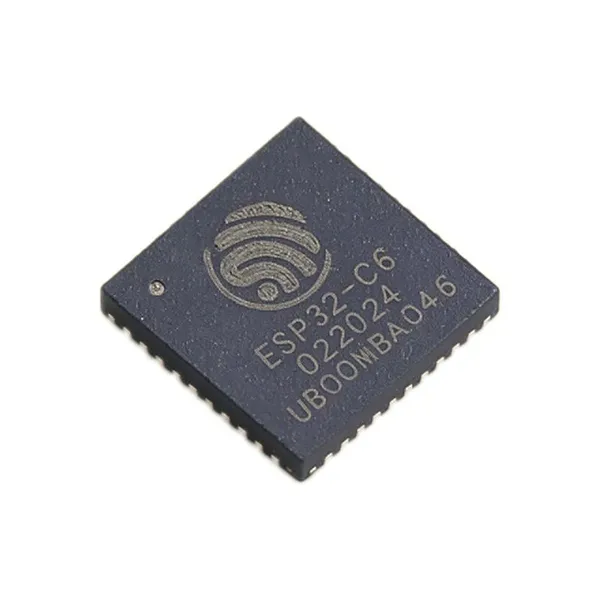
ESP32-C6 RISC-V WiFi 6 + Bluetooth 5.3 LE + Zigbee/Thread SoC 160MHz 512KB SRAM QFN-40 IoT Smart HomeNegotiableMOQ: 100 Units
-
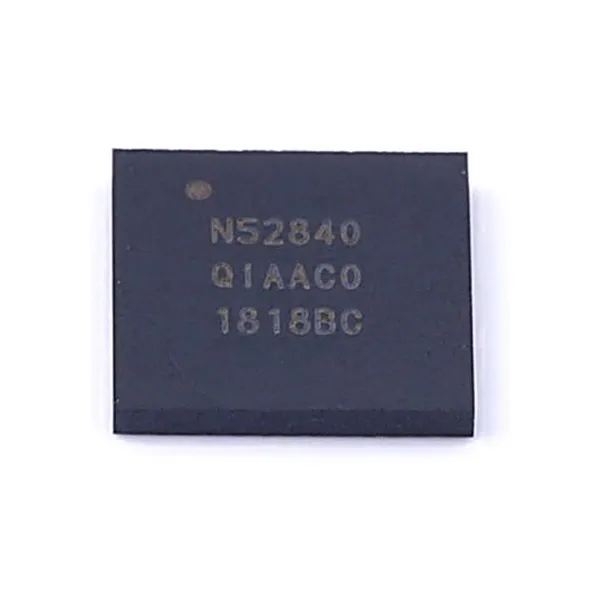
NRF52840 Nordic Bluetooth 5.3 SoC Cortex-M4F 64MHz 1MB Flash 256KB RAM AQFN-73NegotiableMOQ: 100 Units
-
AM3358 TI Sitara AM3358BZCZ100 ARM Cortex-A8 Processor 1GHz BGA-324NegotiableMOQ: 100 Units
-
ADS1115 Texas Instruments ADS1115IDGSR 16-Bit ADC 860 SPS PGA I2C VSSOP-10NegotiableMOQ: 100 Units
-
MSP430FR5994 TI MSP430FR5994IPM Ultra-Low-Power MCU 16MHz 256KB FRAM LEA LQFP-64NegotiableMOQ: 100 Units
-
Espressif ESP32-WROOM-32D WiFi Bluetooth Module Dual-Core 240MHz 4MB Flash PCB Antenna IoTNegotiableMOQ: 100 Units
-
MSP430FR5994 TI MSP430FR5994IRGC Ultra-Low-Power MCU 16MHz 256KB FRAM LEA VQFN-64NegotiableMOQ: 100 Units
-
ATtiny85-20PU 8-Bit AVR Microcontroller 20MHz 8KB Flash 512B SRAM DIP-8NegotiableMOQ: 100 Units
-
Microchip ATmega2560-16AU AVR 8-Bit MCU 16MHz 256KB Flash 8KB SRAM TQFP-100NegotiableMOQ: 100 Units
-
Nordic Semiconductor NRF52832-QFAA Bluetooth 5 SoC ARM Cortex-M4F 64MHz 512KB Flash 64KB RAM QFN-48NegotiableMOQ: 100 Units
-
ATmega32U4-AU Microchip 8-Bit AVR MCU 16MHz 32KB Flash 2.5KB SRAM USB TQFP-44NegotiableMOQ: 100 Units
-
Microchip PIC16F877A-I/P 8-bit PIC MCU 20MHz 14KB Flash 368B RAM DIP-40NegotiableMOQ: 100 Units
-
STMicroelectronics STM32F103C8T6 ARM Cortex-M3 MCU 72MHz 64KB Flash 20KB SRAM LQFP-48NegotiableMOQ: 100 Units