 Business License

ATmega32U4-AU: Microchip 8-Bit AVR MCU with Native USB
Key Takeaways
What it is: The ATmega32U4-AU is Microchip's 8-bit AVR microcontroller with a built-in USB 2.0 device controller, so a USB connection needs no external USB bridge chip.
Memory: 32 KB of in-system self-programmable Flash, 2.5 KB of SRAM, and 1 KB of EEPROM, running up to 16 MHz from a 2.7 to 5.5 V supply.
Why it still sells: It is the chip behind Arduino Leonardo and Pro Micro boards, which makes it the fastest route to a USB keyboard, mouse, game controller, or HID device that a computer recognises without a driver install.
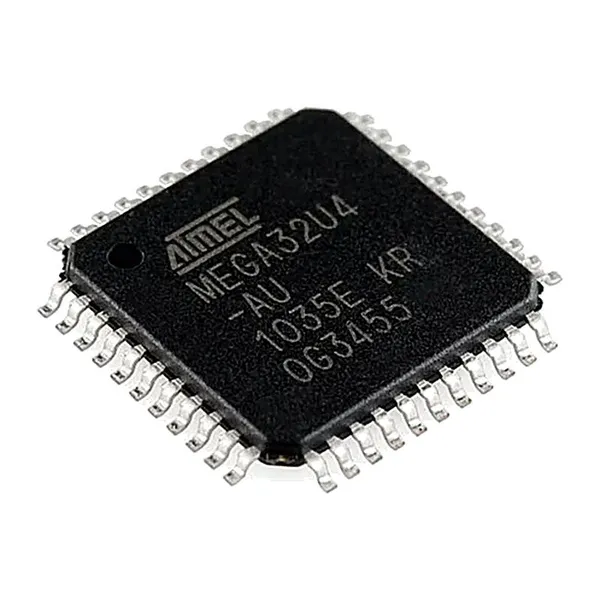
Package: The -AU suffix is the 44-lead TQFP, 10 x 10 mm, industrial temperature range -40°C to +85°C.
Where to buy: QIXINWEI supplies ATmega32U4-AU in bulk with BOM sourcing support. Send your BOM for a fast quote at www.qixinwei-pcba.com.
What Is the ATmega32U4-AU?
The ATmega32U4-AU is a low-power CMOS 8-bit microcontroller based on the AVR enhanced RISC architecture, made by Microchip Technology (formerly Atmel). The -AU suffix tells you the package: a 44-lead thin quad flat package, 10 x 10 mm, surface-mount, for production boards. The same silicon in a 44-pad QFN, 7 x 7 mm, is the ATmega32U4-MU.
What sets this chip apart from the rest of the ATmega family is the USB controller built into the silicon. It is a full USB 2.0 full-speed and low-speed device module, with an on-chip PLL that generates the USB clock and drives the high-speed timer. That means a board built on the ATmega32U4-AU can talk to a computer over a plain USB cable, appearing as a keyboard, a mouse, a joystick, or a serial device, with no FTDI-style bridge chip, no extra USB controller, and no extra line on the BOM.
That is why it became the reference chip for USB human-interface devices. The Arduino Leonardo runs on the ATmega32U4, and so does the Pro Micro, the small board at the heart of countless custom keyboards. Every one of those boards ships with the chip's default USB bootloader pre-programmed, ready for in-system programming over USB, so firmware updates need nothing more than a cable.
It is also a practical production part. It runs from 2.7 to 5.5 V, so it talks directly to 5 V sensors, relays, and legacy peripherals without level shifting. It has a real EEPROM for settings that must survive power loss, a 12-channel 10-bit ADC for analog inputs, and a JTAG interface for on-chip debugging.
Specifications
Manufacturer: Microchip Technology (formerly Atmel)
Core: 8-bit AVR enhanced RISC, up to 16 MIPS at 16 MHz
Flash memory: 32 KB, in-system self-programmable, read-while-write, with a separate boot section
SRAM: 2.5 KB
EEPROM: 1 KB
Endurance: 10,000 Flash write/erase cycles, 100,000 EEPROM write/erase cycles
Data retention: 20 years at 85°C, 100 years at 25°C
General-purpose I/O lines: 26
General-purpose working registers: 32
Maximum clock: 16 MHz at 4.5 V, 8 MHz at 2.7 V, industrial range, with an external crystal on the -AU ordering option
Supply voltage: 2.7 to 5.5 V
USB: USB 2.0 full-speed and low-speed device module, with on-chip PLL for the USB clock
Timer/counters: four timer/counters, including a 10-bit high-speed timer driven by the on-chip PLL
Serial interfaces: one programmable USART with hardware flow control, one master/slave SPI serial interface, one byte-oriented 2-wire serial interface
ADC: 12-channel 10-bit ADC with differential channels and programmable gain
Other peripherals: JTAG interface for on-chip debug, analog comparator, programmable watchdog timer with internal oscillator, real-time counter, brown-out detection
Power saving: software-selectable low-power modes including Idle, ADC Noise Reduction, Power-save, Power-down, Standby, and Extended Standby
Package: 44-lead TQFP, 10 x 10 mm, 1.0 mm body thickness (the -MU option is a 44-pad QFN, 7 x 7 mm)
Operating temperature: -40°C to +85°C, industrial range
Bootloader: default USB bootloader pre-programmed, ready for in-system programming over USB
Why the ATmega32U4-AU Still Wins Designs in 2026
Native USB, no bridge chip. Most 8-bit MCUs need an external USB-to-serial chip to talk to a computer. The ATmega32U4-AU does it on its own silicon. That removes a part from the BOM, a failure point from the board, and a driver headache from the user, because the device can enumerate as a standard HID class device.
The HID ecosystem is the documentation. Leonardo and Pro Micro compatibility means your firmware starts from working keyboard, mouse, and joystick examples, not from a blank datasheet. For a custom keyboard or a USB control panel, that shortens development more than any clock-speed advantage would.
5 V logic, no level shifting. The ATmega32U4-AU runs happily at 5 V, which is still the native voltage of countless sensors, relays, displays, and industrial inputs. Dropping the level shifters saves board space, cost, and a whole class of debugging.
EEPROM on chip. Calibration values, key maps, counters, user settings, and device IDs can live in the 1 KB EEPROM without adding an external memory chip. For a simple product, that is one fewer part on the BOM.
Predictable real-time behaviour. A single-core 8-bit MCU with no operating system and no cache is easy to reason about. Interrupt latency is deterministic, which is exactly what USB HID timing, simple motor control, and sensor polling need.
ATmega32U4-AU vs Alternatives
ATmega32U4-MU: the same silicon in a 44-pad QFN, 7 x 7 mm. Same 32 KB Flash, 2.5 KB SRAM, and 1 KB EEPROM, but a smaller footprint that needs reflow soldering and is harder to inspect. Choose -MU when board space is tight, -AU for easier assembly and debugging.
ATmega32U4RC-AU: the same chip with an internal calibrated RC oscillator instead of an external crystal. Choose it only when the board has no room for a crystal and the application tolerates the RC oscillator's accuracy. For USB work, the external-crystal -AU is the safer order, because full-speed USB needs a stable clock.
ATmega16U4: the smaller sibling, with 16 KB of Flash and 1.25 KB of SRAM in the same package family. A cost-down option only if your firmware actually fits in 16 KB with room to grow. Most USB HID firmware outgrows it quickly, which is why the 32U4 became the standard.
ATmega328P-AU: the classic Arduino Uno chip, with the same 32 KB of Flash but no USB controller at all. Choose the 328P when the board talks to the outside world over UART or I2C and never needs USB. Choose the ATmega32U4-AU the moment the product plugs into a computer.
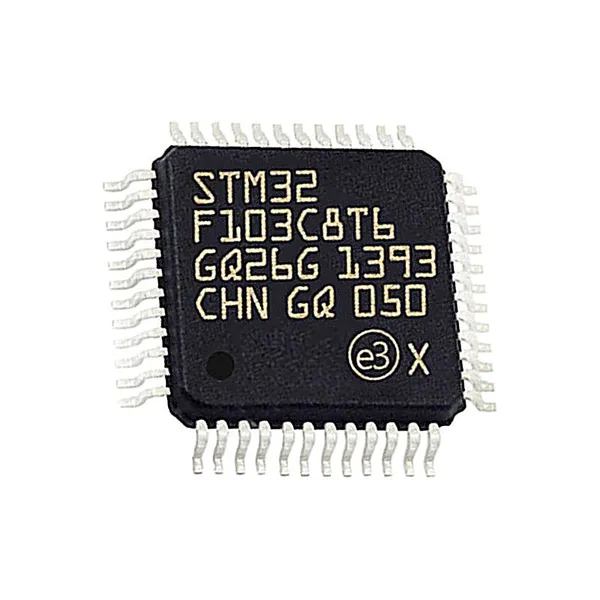
RP2040 and STM32F103C8T6: 32-bit alternatives with far more processing power and memory. Choose them when the product needs heavy computation, a display, or wireless connectivity. Choose the ATmega32U4-AU when the job is a USB device, the board must run at 5 V, and development speed matters more than gigahertz.
Applications
USB keyboards and HID devices: custom mechanical keyboards, macro pads, mice, and joysticks, where the ATmega32U4-AU enumerates as a standard HID device with no driver install.
Game controllers: USB gamepads and arcade sticks, using the native USB device module and the 12-channel ADC for analog sticks and triggers.
Industrial control: simple controllers, sensor nodes, relay boards, and machine interfaces that run at 5 V and need deterministic timing, with USB for configuration and firmware updates.
Consumer electronics: remote controls, small appliances, and gadgets where a USB connection for setup and charging is part of the product.
Medical and handheld equipment: portable instruments that need a small, low-power controller with a USB link to a host for data transfer.
Prototyping and education: Leonardo and Pro Micro boards, teaching kits, and proof-of-concept boards, where the USB bootloader removes the programmer from the workflow.
How to Choose the Right ATmega32U4 Variant
Start with the package. -AU is the 44-lead TQFP for surface-mount production. -MU is the 44-pad QFN for the smallest footprint. The silicon is the same; the package decides the board.
Check the clock source. The standard ATmega32U4-AU runs from an external crystal. The -RC ordering option runs from the internal calibrated RC oscillator. For USB designs, order the external-crystal -AU: full-speed USB needs the stable clock a crystal provides.
Check the speed grade against your supply rail. The ATmega32U4-AU runs up to 16 MHz, but only at 4.5 to 5.5 V. At 2.7 V the maximum is 8 MHz. If your board runs at 3.3 V, confirm the voltage-frequency curve in the datasheet against your actual supply rail before promising 16 MHz performance.
Budget the memory honestly. 32 KB of Flash and 2.5 KB of SRAM are generous for C code and small USB HID firmware, but the default USB bootloader reserves part of the Flash, leaving about 28 KB for user code. If your firmware is already above 24 KB in development, plan for a larger MCU instead of discovering the limit in production.
Use the EEPROM for what it is for. Key maps, calibration, and counters belong in EEPROM. Do not use it as general-purpose RAM, and remember its 100,000-cycle endurance when writing values in a loop.
Common Mistakes When Buying ATmega32U4-AU
Ordering the wrong suffix. ATmega32U4-AU, ATmega32U4-MU, and ATmega32U4RC-AU are the same silicon in different packages and clock options, and ATmega32U4-AUR is the tape-and-reel packing of the -AU. Order by the full part number including the suffix, and confirm the packing format your assembly line expects.
Running 16 MHz at 3.3 V. The headline speed is 16 MHz, but the datasheet allows it only at 4.5 to 5.5 V. A design that runs at 3.3 V and expects 16 MHz is out of specification. Check the voltage-frequency curve before laying out the board.
Forgetting the crystal. The -AU ordering option needs an external crystal, and USB needs that crystal to be accurate. Budget the crystal and its load capacitors on the BOM from the start, and do not swap in the -RC option on a USB board to save the crystal.
Confusing it with the ATmega328P-AU. The part numbers look alike and the Flash size is the same, but the 328P has no USB controller and cannot enumerate as a HID device. A board laid out for one cannot take the other: the pinouts and peripherals are different.
Accepting remarked or counterfeit chips. The ATmega32U4 is one of the most cloned MCUs in the world, because it sits in so many popular boards. Remarked parts, pulled chips, and pin-compatible clones circulate widely, and they often fail on USB behaviour, ADC accuracy, or EEPROM endurance. If your firmware was validated on original Microchip silicon, source original Microchip silicon and verify the lot.
Where to Source ATmega32U4-AU
QIXINWEI supplies ATmega32U4-AU in bulk, along with the rest of your BOM. Send your full BOM list and we quote, source, and ship it in one go, including hard-to-find and obsolete parts. As a Shenzhen-based distributor, we serve industrial, consumer, and maker customers worldwide.
Related Microchip parts already on the QIXINWEI site include the ATmega328P-AU product page. Browse the full range on the QIXINWEI homepage.
FAQ
What is the ATmega32U4-AU used for?
The ATmega32U4-AU is used for USB keyboards and HID devices, game controllers, industrial control, consumer electronics, and medical and handheld equipment. It is the chip behind Arduino Leonardo and Pro Micro boards, because its built-in USB 2.0 device controller lets it appear as a keyboard, mouse, or joystick with no external USB chip.
What are the key specifications of the ATmega32U4-AU?
The ATmega32U4-AU is an 8-bit AVR microcontroller running up to 16 MIPS at 16 MHz, with 32 KB of Flash, 2.5 KB of SRAM, and 1 KB of EEPROM. It has a USB 2.0 full-speed and low-speed device module, a 12-channel 10-bit ADC, a JTAG debug interface, and 26 programmable I/O lines in a 44-lead TQFP package.
Does the ATmega32U4-AU need an external USB chip?
No. The ATmega32U4-AU has a USB 2.0 device controller built into the silicon, with an on-chip PLL for the USB clock. A board built on the ATmega32U4-AU connects to a computer over a plain USB cable, and the default USB bootloader is pre-programmed so firmware updates need no external programmer.
What voltage and clock speed does the ATmega32U4-AU run at?
The ATmega32U4-AU runs from 2.7 to 5.5 V, but the maximum clock depends on the supply voltage: 16 MHz is allowed only at 4.5 to 5.5 V, and at 2.7 V the maximum is 8 MHz. Check the voltage-frequency curve in the datasheet against your actual supply rail before designing for 16 MHz.
What is the difference between the ATmega32U4-AU and the ATmega328P-AU?
The ATmega32U4-AU has a built-in USB 2.0 device controller and 2.5 KB of SRAM, while the ATmega328P-AU has no USB controller and 2 KB of SRAM. Choose the ATmega32U4-AU when the product plugs into a computer over USB, and the ATmega328P-AU when the board only needs UART or I2C and never needs USB.
Conclusion
The ATmega32U4-AU has survived every wave of faster, cheaper, more connected MCUs for one reason: it is the simplest reliable way to build a USB device. With 32 KB of Flash, 2.5 KB of SRAM, native USB, 5 V operation, and the Leonardo and Pro Micro ecosystem behind it, it remains the right choice for keyboards, controllers, and USB instruments in 2026, and it will keep shipping in volume for as long as engineers need a controller that plugs straight into a computer.
Need ATmega32U4-AU in bulk? Send your BOM to QIXINWEI and get a fast quote at www.qixinwei-pcba.com.
Recently Posted
-
INA226AQDGSRQ1: A 16-Bit Current and Power Monitor for Automotive Power Rails
November 20, 2026A power rail in an automotive system is only as reliable as the measurement behind it. When a battery management system, an ADAS d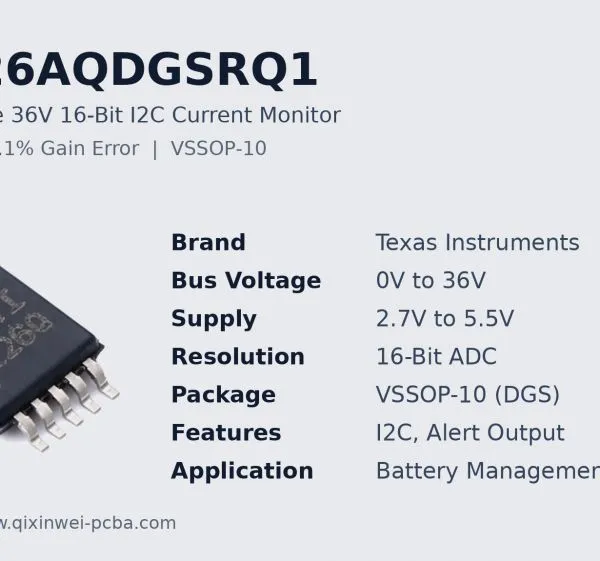 Read More
-
DRV8889QWRGERQ1: TI Automotive Stepper Driver with 1/256 Microstepping
November 14, 2026Key TakeawaysThe DRV8889QWRGERQ1 is a Texas Instruments AEC-Q100 qualified stepper motor driver for automotive bipolar stepper mot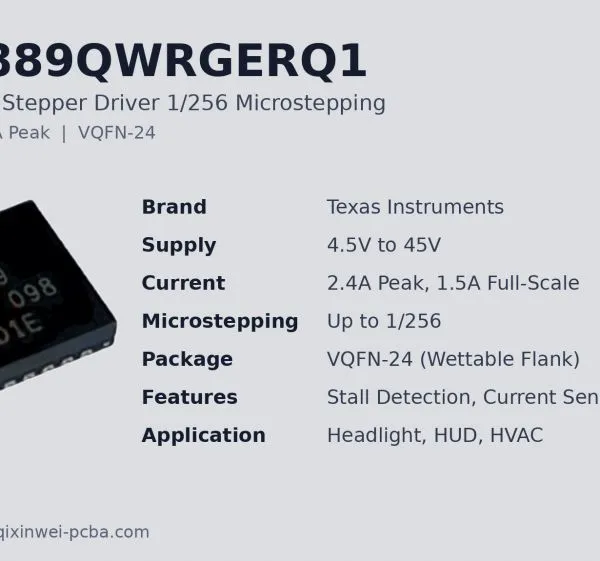 Read More
-
STC89C52 vs AT89S52: Two Classic 8051 MCUs — Which One Should You Choose?
November 12, 2026By QIXINWEI | STC89C52 vs AT89S52 | Classic 8051 MCU ComparisonThe STC89C52 and the AT89S52 look alike on paper: the same name str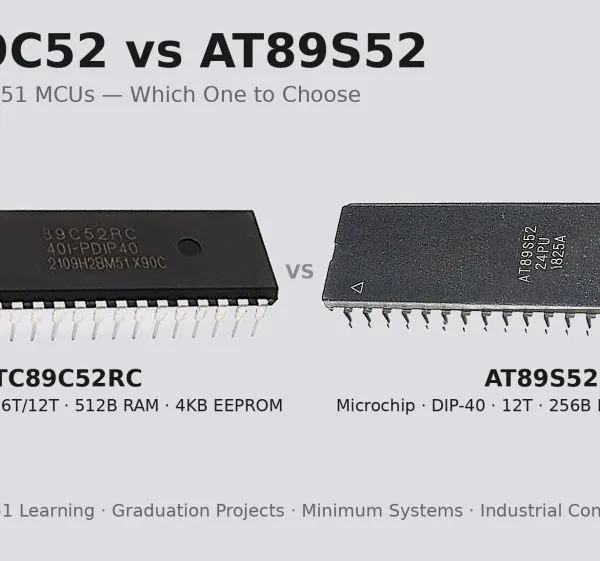 Read More
-
LM317 Adjustable Voltage Regulator: Design Guide & Circuits
November 12, 2026By QIXINWEI | TI LM317 | Adjustable Voltage RegulatorKey TakeawaysThe LM317 is a three-terminal adjustable positive voltage regula Read More

Contact Us
Recommended Products
-
 TPS4H160BQPWPRQ1 Original TI Automotive Quad-Channel 160mOhm Smart High-Side Switch HTSSOP-28NegotiableMOQ: 100 Units
-
DRV8889QWRGERQ1 Original TI Automotive Stepper Motor Driver 2.4A 45V VQFN-24NegotiableMOQ: 100 Units
-
TPS7B6933QDCYRQ1 Original TI Automotive 3.3V 150mA 40V LDO Linear Regulator SOT-223NegotiableMOQ: 100 Units
-
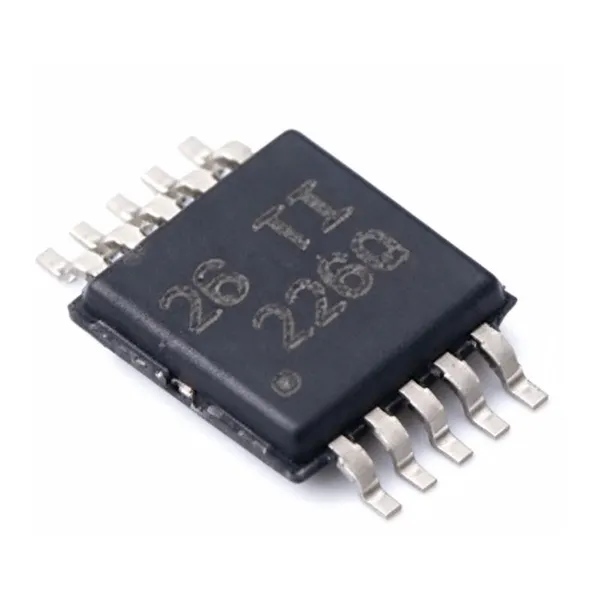
INA226AQDGSRQ1 Original TI Automotive 36V 16-Bit I2C Current Power Monitor VSSOP-10NegotiableMOQ: 100 Units
-
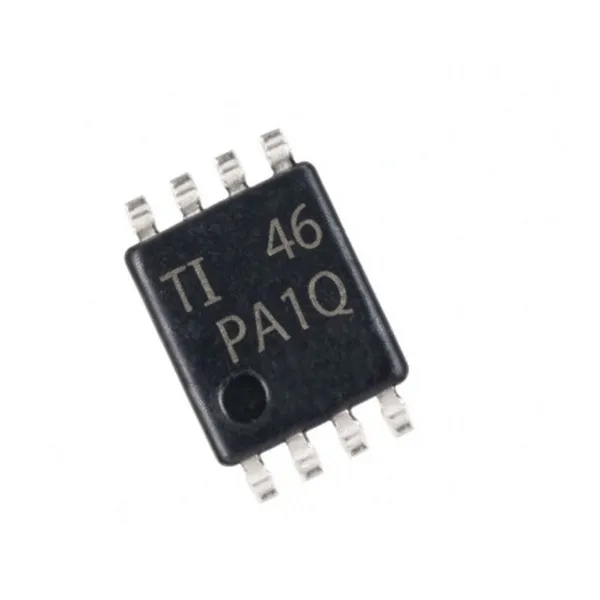
TPS7A6650QDGNRQ1 Original TI Automotive 150mA 40V LDO Linear Regulator 5V Fixed Output HVSSOP-8NegotiableMOQ: 100 Units
-
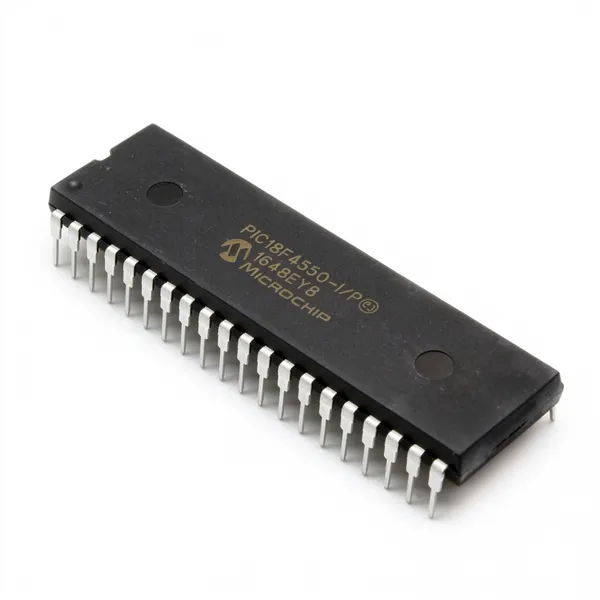
Microchip PIC18F4550-I/P 8-Bit MCU 48MHz 32KB Flash USB 2.0 DIP-40NegotiableMOQ: 100 Units
-
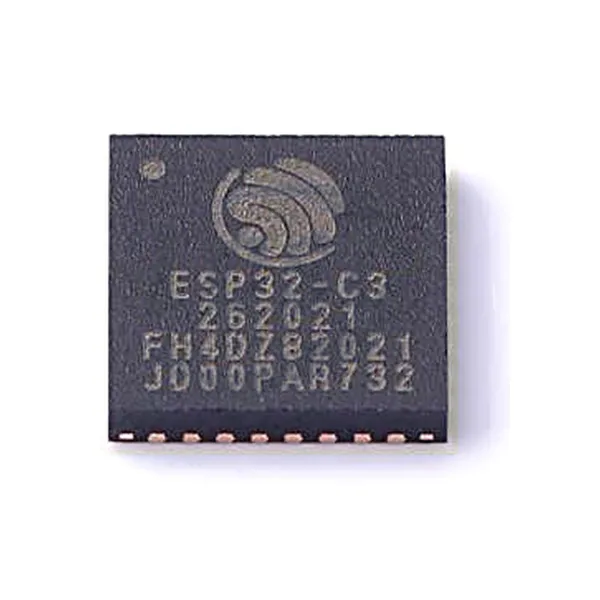
Espressif ESP32-C3 RISC-V WiFi Bluetooth LE Microcontroller 160MHz 400KB SRAM QFN-32NegotiableMOQ: 100 Units
-
ESP32-C6 RISC-V WiFi 6 + Bluetooth 5.3 LE + Zigbee/Thread SoC 160MHz 512KB SRAM QFN-40 IoT Smart HomeNegotiableMOQ: 100 Units
-
NRF52840 Nordic Bluetooth 5.3 SoC Cortex-M4F 64MHz 1MB Flash 256KB RAM AQFN-73NegotiableMOQ: 100 Units
-
AM3358 TI Sitara AM3358BZCZ100 ARM Cortex-A8 Processor 1GHz BGA-324NegotiableMOQ: 100 Units
-
ADS1115 Texas Instruments ADS1115IDGSR 16-Bit ADC 860 SPS PGA I2C VSSOP-10NegotiableMOQ: 100 Units
-
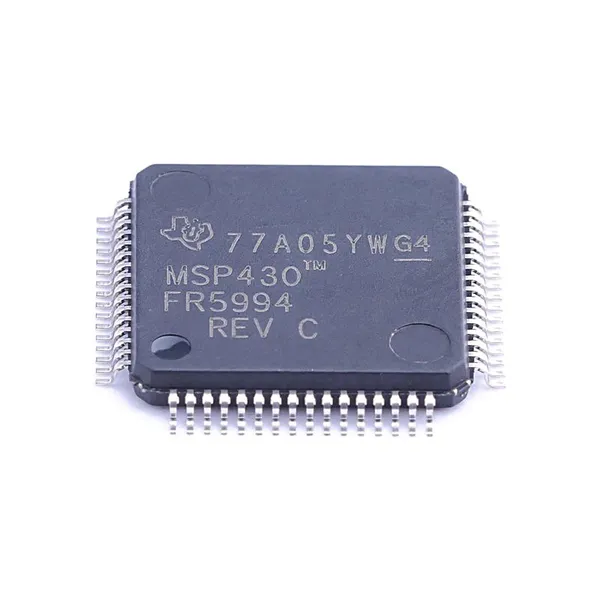
MSP430FR5994 TI MSP430FR5994IPM Ultra-Low-Power MCU 16MHz 256KB FRAM LEA LQFP-64NegotiableMOQ: 100 Units
-
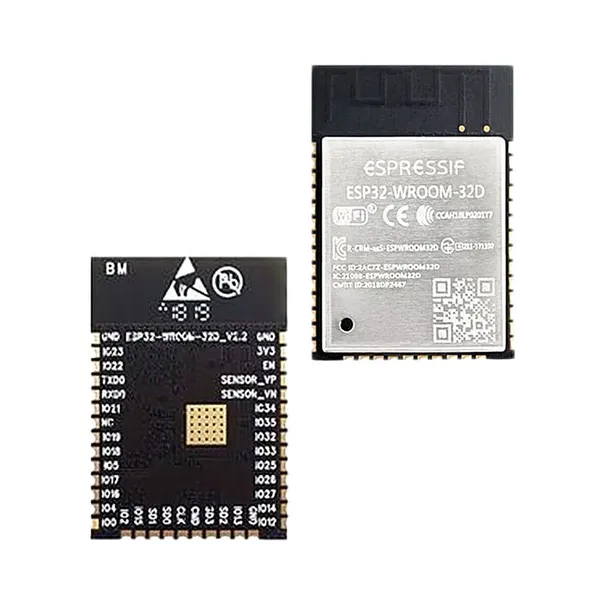
Espressif ESP32-WROOM-32D WiFi Bluetooth Module Dual-Core 240MHz 4MB Flash PCB Antenna IoTNegotiableMOQ: 100 Units
-
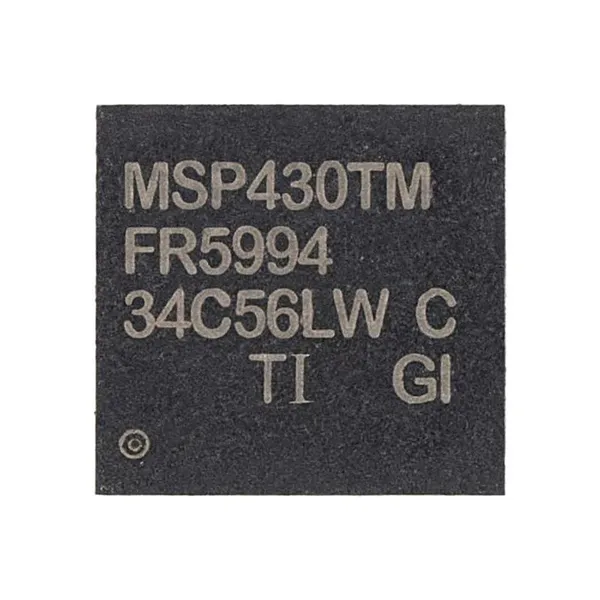
MSP430FR5994 TI MSP430FR5994IRGC Ultra-Low-Power MCU 16MHz 256KB FRAM LEA VQFN-64NegotiableMOQ: 100 Units
-
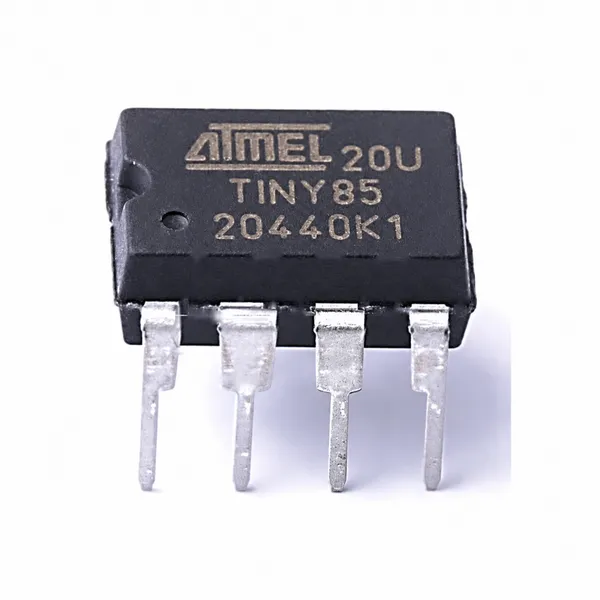
ATtiny85-20PU 8-Bit AVR Microcontroller 20MHz 8KB Flash 512B SRAM DIP-8NegotiableMOQ: 100 Units
-
Microchip ATmega2560-16AU AVR 8-Bit MCU 16MHz 256KB Flash 8KB SRAM TQFP-100NegotiableMOQ: 100 Units
-
Nordic Semiconductor NRF52832-QFAA Bluetooth 5 SoC ARM Cortex-M4F 64MHz 512KB Flash 64KB RAM QFN-48NegotiableMOQ: 100 Units
-
ATmega32U4-AU Microchip 8-Bit AVR MCU 16MHz 32KB Flash 2.5KB SRAM USB TQFP-44NegotiableMOQ: 100 Units
-
Microchip PIC16F877A-I/P 8-bit PIC MCU 20MHz 14KB Flash 368B RAM DIP-40NegotiableMOQ: 100 Units
-
STMicroelectronics STM32F103C8T6 ARM Cortex-M3 MCU 72MHz 64KB Flash 20KB SRAM LQFP-48NegotiableMOQ: 100 Units