 Business License

DRV8889QWRGERQ1: TI Automotive Stepper Driver with 1/256 Microstepping
Key Takeaways
The DRV8889QWRGERQ1 is a Texas Instruments AEC-Q100 qualified stepper motor driver for automotive bipolar stepper motors, with up to 1/256 microstepping, integrated current sensing, and advanced stall detection.
It delivers 2.4A peak, 1.5A full-scale, and 1.1A rms current per bridge from a 4.5V to 45V supply, with a low-current sleep mode drawing only 2uA.
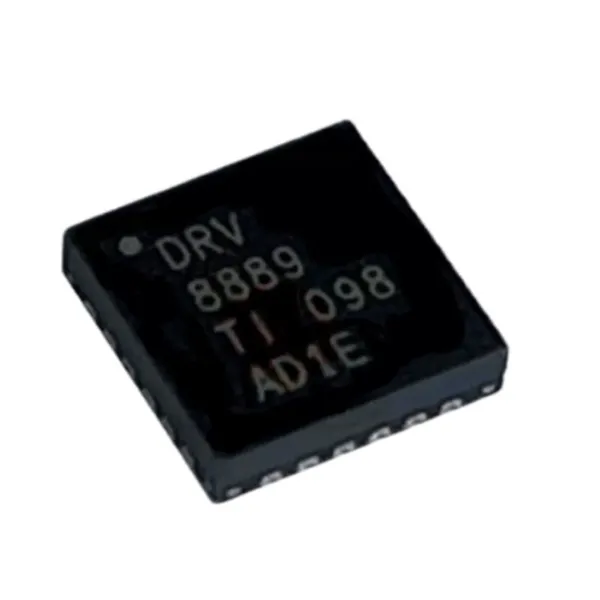
The device integrates two N-channel power MOSFET H-bridges, a microstepping indexer, smart tune decay technology, and spread spectrum clocking to minimize EMI, in a compact 4mm x 4mm VQFN-24 package with wettable flanks.
QIXINWEI supplies the DRV8889QWRGERQ1 as an original TI part with BOM sourcing support for automotive and industrial designs.
What Is the DRV8889QWRGERQ1?
The DRV8889QWRGERQ1 is a fully integrated stepper motor driver from Texas Instruments, designed for automotive bipolar stepper motors. It integrates two N-channel power MOSFET H-bridges, current sense and regulation circuitry, and a microstepping indexer in a single package. The device is powered from a 4.5V to 45V supply and can drive up to 2.4A peak, 1.5A full-scale, or 1.1A rms per bridge, depending on ambient temperature, supply voltage, and PCB thermal capability.
Unlike a discrete stepper driver built from separate MOSFETs and a controller, the DRV8889QWRGERQ1 puts the power stage, current regulation, and microstepping logic together. That integration reduces board area, simplifies the layout, and removes the need for external current sense resistors, which is the main reason the part uses integrated current sensing.
Key Specifications
Brand: Texas Instruments (TI)
Part Number: DRV8889QWRGERQ1
Category: Stepper Motor Driver
Supply Voltage: 4.5V to 45V
Peak Current: 2.4A per Bridge
Full-Scale Current: 1.5A per Bridge
RMS Current: 1.1A per Bridge
Microstepping: Up to 1/256
RDS(ON): 900 mOhm HS + LS at 25C
Sleep Current: 2uA
Operating Temperature: -40C to +125C
Package: VQFN-24 (Wettable Flank)
Package Size: 4.00mm x 4.00mm
Qualification: AEC-Q100
Why 1/256 Microstepping Matters
Microstepping divides each full motor step into smaller increments, which makes the motor run smoother and quieter. At 1/256 microstepping, a standard 1.8-degree stepper motor moves in increments of about 0.007 degrees, which is far finer than the mechanical resolution most automotive mechanisms need, but the smoothness it brings is the point. The motor produces less vibration and audible noise, the motion is more precise at low speeds, and resonance that causes missed steps is reduced. For a headlight position adjuster or a head-up display mirror, that smoothness is the difference between a mechanism that feels precise and one that buzzes.
The indexer supports full step, half step, and 1/4, 1/8, 1/16, 1/32, 1/64, 1/128, and 1/256 microstepping, set through the SPI register, so the same part can serve both coarse positioning and fine adjustment by changing the mode in firmware.
Integrated Current Sense and Stall Detection
The DRV8889QWRGERQ1 integrates current sensing, so no external shunt resistors are needed on the motor outputs. The current regulation set point is adjusted by the voltage at the VREF pin, and the device regulates the winding current automatically. That saves two precision resistors and the board space they take, and it removes a source of measurement error.
Stall detection is built in as an advanced algorithm that monitors the motor and compensates for variation and aging. When the motor stalls, the device reports it, so the system can stop driving, retry, or flag a fault instead of continuing to push against a jammed mechanism. For a headlight adjuster that has hit its end stop, or an HVAC flap that is blocked, that detection prevents overheating and mechanical damage.
Smart Tune Decay and Low EMI
Smart tune decay technology automatically selects the current decay mode for the motor, which keeps the current waveform clean across speed and load without manual tuning. Spread spectrum clocking spreads the switching energy across a frequency band to minimize EMI, which matters in automotive designs where the driver sits near radio and sensor circuits. Overcurrent protection, open load detection, and overtemperature warning and shutdown are all integrated, so a fault on one output does not damage the driver or the motor.
Typical Applications
Headlight position adjustment: Drives the stepper motor that aims the headlight beam, with fine microstepping for precise beam height and stall detection at the end stops.
Head-up display (HUD): Positions the HUD mirror with smooth, quiet motion so the projected image stays stable.
HVAC stepper motors: Controls air blend and mode flaps in the climate system, where quiet operation and reliable end-stop detection matter.
Electronic fuel injection (EFI): Drives stepper actuators in the fuel system with the current capacity and temperature range the under-hood environment requires.
Automotive bipolar stepper motors: General-purpose stepper drive for any automotive mechanism that needs precise, quiet positioning.
Design Considerations
The VQFN-24 package has an exposed thermal pad that must be soldered to a large copper area on the PCB, because the driver dissipates significant power at full current. The actual full-scale and rms current the device can sustain depends on ambient temperature, supply voltage, and PCB thermal capability, so the thermal design sets the real current limit, not just the datasheet number. The sleep mode draws only 2uA, which keeps the standby battery drain negligible when the motor is parked. The wettable flank package allows automated optical inspection of the solder joints, which is a requirement in many automotive production lines.
FAQ
What does the DRV8889QWRGERQ1 drive?
It drives automotive bipolar stepper motors, with two integrated H-bridges, up to 2.4A peak and 1.5A full-scale per bridge.
What microstepping levels does it support?
Up to 1/256 microstepping, with full step, half step, and 1/4 through 1/256 modes set through SPI.
What is the supply voltage range?
4.5V to 45V, suitable for automotive 12V and 24V systems.
Does it need external current sense resistors?
No. Current sensing is integrated, so no external shunt resistors are required on the motor outputs.
What package is the DRV8889QWRGERQ1?
VQFN-24 with wettable flanks, 4.00mm x 4.00mm, with an exposed thermal pad.
Is the DRV8889QWRGERQ1 automotive qualified?
Yes. It is qualified to AEC-Q100, operating from -40C to +125C ambient.
Where to Source the DRV8889QWRGERQ1
QIXINWEI supplies the DRV8889QWRGERQ1 as an original TI part, with BOM sourcing support for automotive and industrial projects. For current availability, lead time, or a BOM quotation, contact QIXINWEI at www.qixinwei-pcba.com.
Conclusion
The DRV8889QWRGERQ1 combines 1/256 microstepping, integrated current sensing, stall detection, and smart tune decay in a compact 4mm x 4mm VQFN package. With 2.4A peak current, a 4.5V to 45V supply range, and AEC-Q100 qualification, it is a practical choice for headlight adjustment, HUD, HVAC flaps, and any automotive stepper mechanism that needs smooth, quiet, and reliable motion.
Recently Posted
-
INA226AQDGSRQ1: A 16-Bit Current and Power Monitor for Automotive Power Rails
November 20, 2026A power rail in an automotive system is only as reliable as the measurement behind it. When a battery management system, an ADAS d Read More
-
ATmega32U4-AU: Microchip 8-Bit AVR MCU with Native USB
November 18, 2026Key TakeawaysWhat it is: The ATmega32U4-AU is Microchip's 8-bit AVR microcontroller with a built-in USB 2.0 device controller, Read More
-
STC89C52 vs AT89S52: Two Classic 8051 MCUs — Which One Should You Choose?
November 12, 2026By QIXINWEI | STC89C52 vs AT89S52 | Classic 8051 MCU ComparisonThe STC89C52 and the AT89S52 look alike on paper: the same name str Read More
-
LM317 Adjustable Voltage Regulator: Design Guide & Circuits
November 12, 2026By QIXINWEI | TI LM317 | Adjustable Voltage RegulatorKey TakeawaysThe LM317 is a three-terminal adjustable positive voltage regula Read More

Contact Us
Recommended Products
-
 TPS4H160BQPWPRQ1 Original TI Automotive Quad-Channel 160mOhm Smart High-Side Switch HTSSOP-28NegotiableMOQ: 100 Units
-
DRV8889QWRGERQ1 Original TI Automotive Stepper Motor Driver 2.4A 45V VQFN-24NegotiableMOQ: 100 Units
-
TPS7B6933QDCYRQ1 Original TI Automotive 3.3V 150mA 40V LDO Linear Regulator SOT-223NegotiableMOQ: 100 Units
-
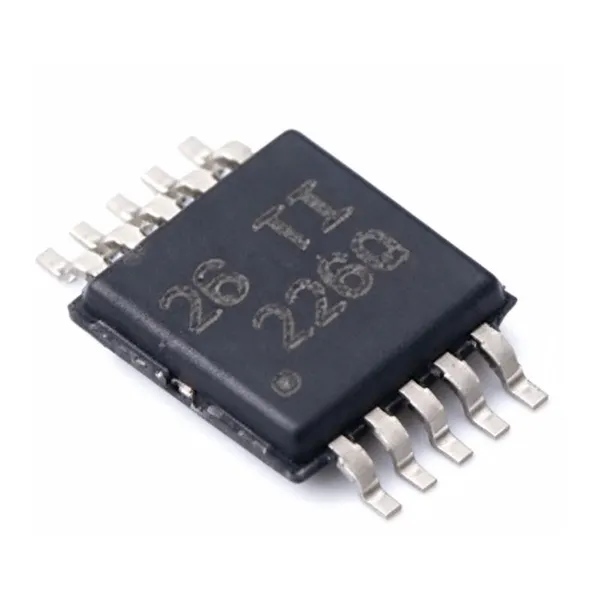
INA226AQDGSRQ1 Original TI Automotive 36V 16-Bit I2C Current Power Monitor VSSOP-10NegotiableMOQ: 100 Units
-
TPS7A6650QDGNRQ1 Original TI Automotive 150mA 40V LDO Linear Regulator 5V Fixed Output HVSSOP-8NegotiableMOQ: 100 Units
-
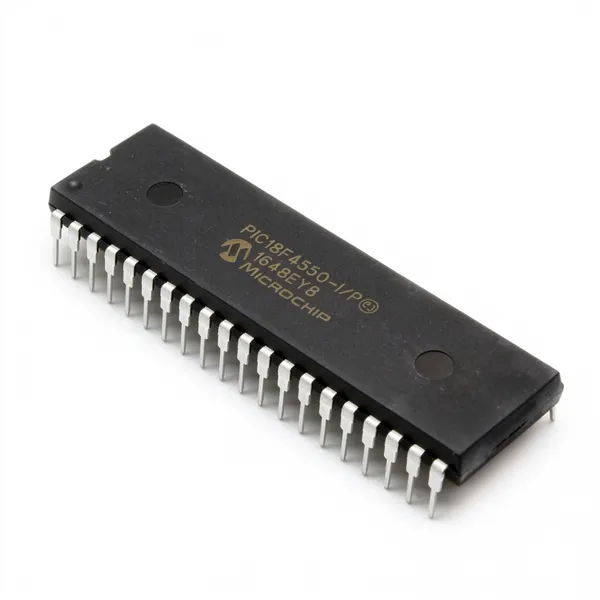
Microchip PIC18F4550-I/P 8-Bit MCU 48MHz 32KB Flash USB 2.0 DIP-40NegotiableMOQ: 100 Units
-
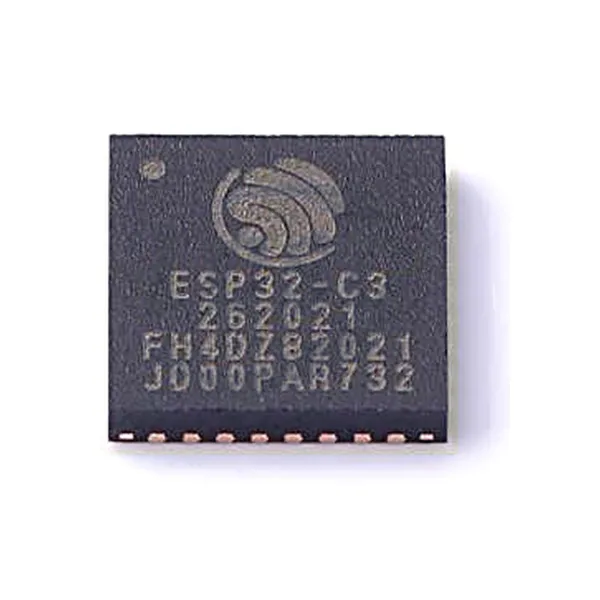
Espressif ESP32-C3 RISC-V WiFi Bluetooth LE Microcontroller 160MHz 400KB SRAM QFN-32NegotiableMOQ: 100 Units
-
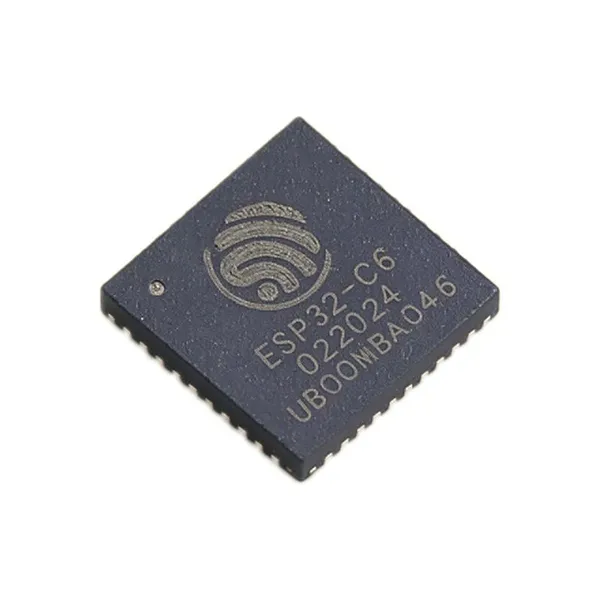
ESP32-C6 RISC-V WiFi 6 + Bluetooth 5.3 LE + Zigbee/Thread SoC 160MHz 512KB SRAM QFN-40 IoT Smart HomeNegotiableMOQ: 100 Units
-
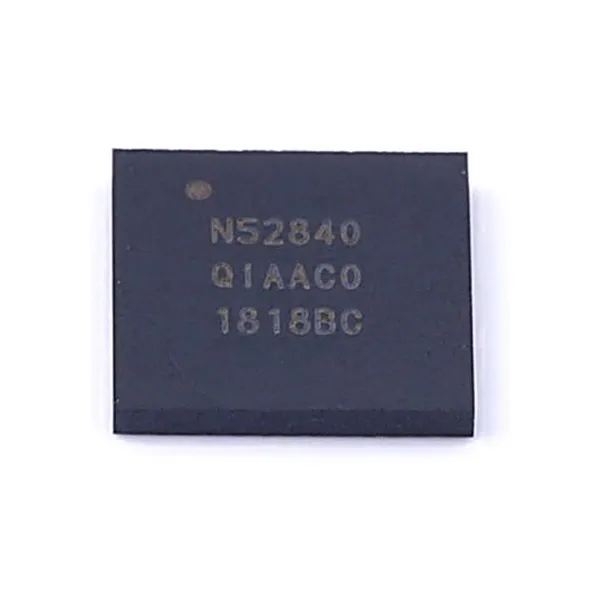
NRF52840 Nordic Bluetooth 5.3 SoC Cortex-M4F 64MHz 1MB Flash 256KB RAM AQFN-73NegotiableMOQ: 100 Units
-
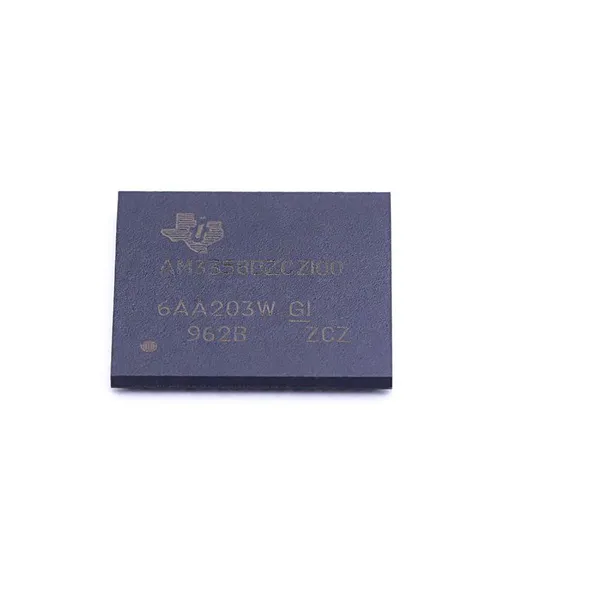
AM3358 TI Sitara AM3358BZCZ100 ARM Cortex-A8 Processor 1GHz BGA-324NegotiableMOQ: 100 Units
-
ADS1115 Texas Instruments ADS1115IDGSR 16-Bit ADC 860 SPS PGA I2C VSSOP-10NegotiableMOQ: 100 Units
-
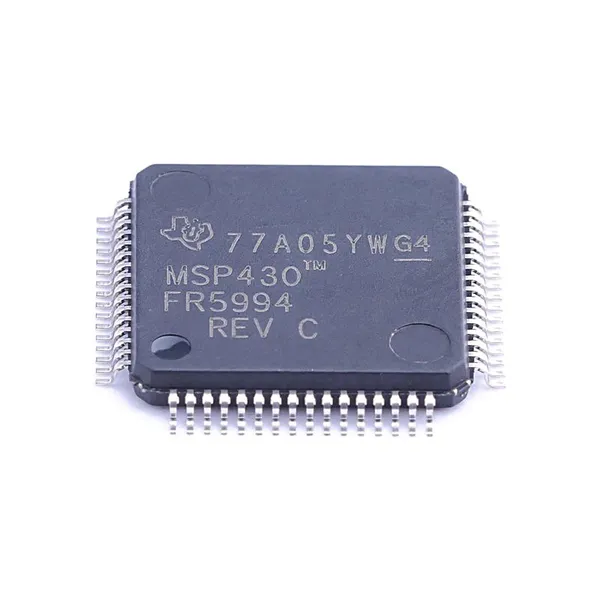
MSP430FR5994 TI MSP430FR5994IPM Ultra-Low-Power MCU 16MHz 256KB FRAM LEA LQFP-64NegotiableMOQ: 100 Units
-
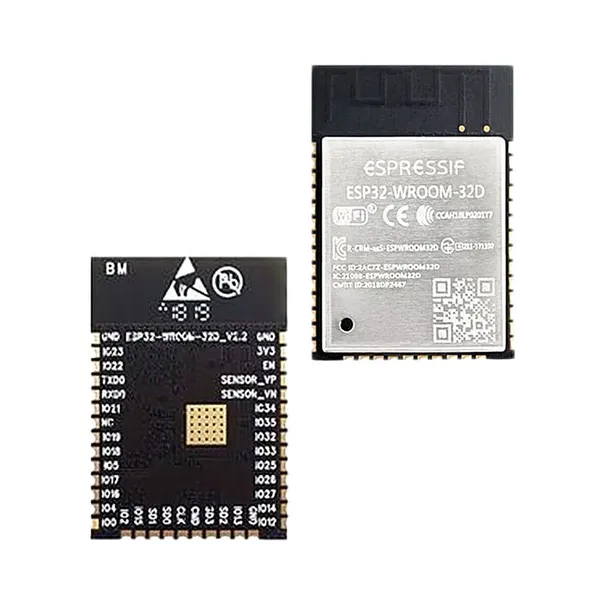
Espressif ESP32-WROOM-32D WiFi Bluetooth Module Dual-Core 240MHz 4MB Flash PCB Antenna IoTNegotiableMOQ: 100 Units
-
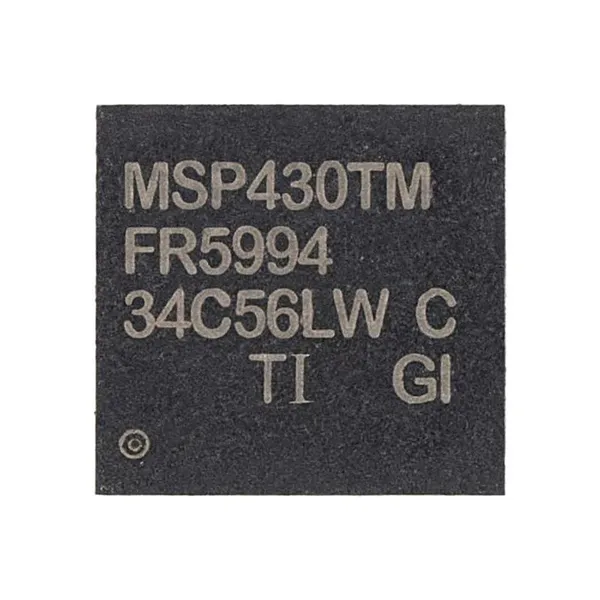
MSP430FR5994 TI MSP430FR5994IRGC Ultra-Low-Power MCU 16MHz 256KB FRAM LEA VQFN-64NegotiableMOQ: 100 Units
-
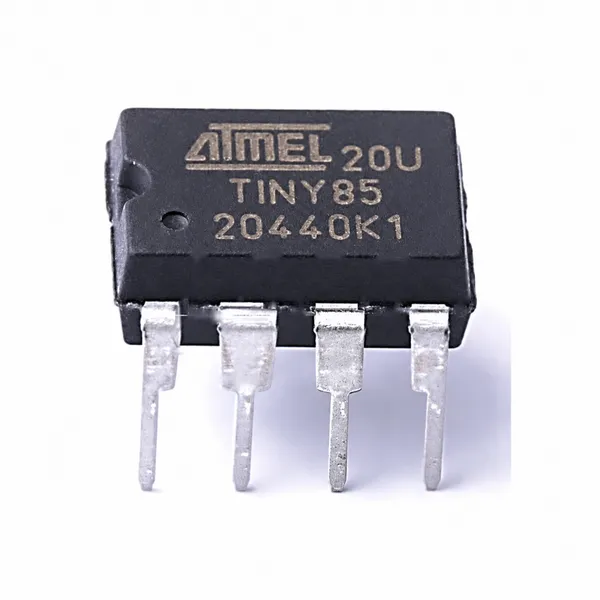
ATtiny85-20PU 8-Bit AVR Microcontroller 20MHz 8KB Flash 512B SRAM DIP-8NegotiableMOQ: 100 Units
-
Microchip ATmega2560-16AU AVR 8-Bit MCU 16MHz 256KB Flash 8KB SRAM TQFP-100NegotiableMOQ: 100 Units
-
Nordic Semiconductor NRF52832-QFAA Bluetooth 5 SoC ARM Cortex-M4F 64MHz 512KB Flash 64KB RAM QFN-48NegotiableMOQ: 100 Units
-
ATmega32U4-AU Microchip 8-Bit AVR MCU 16MHz 32KB Flash 2.5KB SRAM USB TQFP-44NegotiableMOQ: 100 Units
-
Microchip PIC16F877A-I/P 8-bit PIC MCU 20MHz 14KB Flash 368B RAM DIP-40NegotiableMOQ: 100 Units
-
STMicroelectronics STM32F103C8T6 ARM Cortex-M3 MCU 72MHz 64KB Flash 20KB SRAM LQFP-48NegotiableMOQ: 100 Units