 Business License

MSP430: Ultra-Low-Power MCU Design Guide | FRAM & Battery Life
By QIXINWEI | TI MSP430 | Ultra-Low-Power Microcontrollers
Key Takeaways
The MSP430 from Texas Instruments is the classic ultra-low-power 16-bit microcontroller, and its whole design philosophy is different from performance MCUs: the chip is built to sleep. Most battery-powered devices spend more than 99 percent of their life asleep, so the standby current matters far more than the active current, and the MSP430 wins on standby.
The MSP430 offers seven low-power modes, from LPM0 down to LPM4.5 shutdown. The flagship FRAM part, the MSP430FR5994, draws 118µA per MHz when active, 500nA in LPM3 standby, 350nA in LPM3.5 with the real-time clock running, and just 45nA in LPM4.5 shutdown.
FRAM is the second half of the power story. Unlike Flash, FRAM writes in 125ns per word with no erase cycle, so logging data costs almost no energy, and its 10^15 write-cycle endurance means a data logger can write every second for years without wearing out the memory.
A sensor node that wakes for 5ms every 10 seconds and sleeps in LPM3 the rest of the time draws about 1.5µA on average. On a 225mAh CR2032 coin cell, that is years of operation in theory, and in practice the battery's own self-discharge becomes the limit, not the microcontroller.
QIXINWEI supplies original TI MSP430 microcontrollers across the value-line, USB, and FRAM series, with bulk supply and BOM matching for production volumes.
Why Battery Life Is the Real Design Spec
Most microcontroller datasheets lead with clock speed and memory size. For a battery-powered product, those numbers are the wrong place to start. A smart meter, a wearable sensor, or a wireless temperature node spends its life waiting: waiting for the next measurement, the next button press, the next radio window. A realistic duty cycle is 5 milliseconds awake and 10 seconds asleep, which means the chip is sleeping 99.95 percent of the time.
When the chip sleeps 99.95 percent of the time, the sleep current decides the battery life. A microcontroller that draws 100µA per MHz when active but 50µA in standby will drain a coin cell in months, no matter how fast it runs. A microcontroller that draws the same active current but only 0.5µA in standby will run for years on the same cell. This is the trade the MSP430 was designed around, and it is why the family has survived for two decades while faster, hungrier chips came and went.
The MSP430 is a 16-bit RISC architecture, usually running at 8 to 25MHz depending on the series. That sounds slow next to a 240MHz ESP32 or a 170MHz STM32, but a sensor node does not need 240MHz. It needs to wake up, read an ADC channel, do a little math, send a few bytes, and go back to sleep, all in a few milliseconds. The MSP430 does that at a fraction of the energy, and the energy is the spec that matters.
MSP430 Low-Power Modes: LPM0 to LPM4.5
The MSP430 has one active mode and seven software-selectable low-power modes. The modes form a ladder: each step down turns off more of the chip and saves more current, at the cost of a slower wake-up and less state kept alive. Picking the right rung of the ladder is the core skill of MSP430 design.
Active mode: CPU and all clocks running. The MSP430FR5994 draws 118µA per MHz. The USB-series MSP430F5529 draws about 290µA per MHz from Flash. This is the most expensive mode, so the goal is to spend as little time here as possible.
LPM0: CPU off, high-speed clocks off, low-frequency clocks and peripherals still running. Used when a peripheral, such as an ADC or a timer, needs to keep working while the CPU sleeps.
LPM1 and LPM2: CPU off, progressively more clocks stopped. Intermediate steps that most designs pass through on the way to the deeper modes.
LPM3 standby: CPU off, all high-speed clocks off, only the 32.768kHz crystal clock running. The real-time clock, watchdog, and supply supervisor stay alive, and the full RAM contents are kept. The MSP430FR5994 draws 500nA here. The MSP430F5529 draws about 2.1µA at 3V. This is the normal sleep mode for a sensor that wakes on a timer.
LPM4 off: All clocks off, full RAM retention, supply supervisor still watching. Slightly lower current than LPM3, around 1.1µA on the MSP430F5529. Wake-up is by an external interrupt, not a timer, since no clock is running.
LPM3.5 RTC only: The core supply is switched off, so RAM is not retained, but the real-time clock keeps running from the crystal. The MSP430FR5994 draws 350nA here. The chip wakes by reset, so the firmware must be written to restore its state from FRAM on wake-up.
LPM4.5 shutdown: Everything off, no RAM retention, no RTC. The MSP430FR5994 draws 45nA, and the lowest figures in the family reach 20nA. Wake-up is by reset from an external event such as a button press. This is the mode for a device that spends months untouched between uses.
Wake-up speed matters as much as sleep current. Waking from LPM3 standby takes only a few microseconds on the MSP430, typically 3.5µs on the F5xx series, because the digitally controlled oscillator starts almost instantly. A slow wake-up wastes energy and misses fast events, so the combination of deep sleep and fast wake-up is what makes the low-power modes practical rather than just impressive on paper.
FRAM vs Flash: Why Memory Choice Changes Power
The MSP430 family splits into two memory technologies, and the choice changes the power budget as much as the low-power modes do. The older value-line and USB parts use Flash. The newer FRAM parts, such as the MSP430FR5994 and MSP430FR5969, use ferroelectric RAM, a non-volatile memory that behaves like RAM.
Write speed: FRAM writes at 125ns per word, so 64KB can be written in about 4ms. Flash needs an erase cycle before every write, and erase takes milliseconds per segment. Logging data to FRAM costs almost no time and almost no energy.
Write energy: Because FRAM writes fast and needs no erase, the energy per write is far lower than Flash. For a data logger that writes a measurement every few seconds, the Flash erase cycles can cost more energy than the microcontroller itself.
Endurance: FRAM is rated for 10^15 write cycles, effectively unlimited. Flash endurance is orders of magnitude lower, typically tens of thousands of cycles. A logger writing once per second would wear out Flash in months and would never wear out FRAM.
Unified memory: FRAM holds both code and data in one memory space, so the firmware can use any unused program memory as data storage without partitioning, and firmware updates can be written without a separate bootloader region.
Instant-on state: Because FRAM is non-volatile and fast to write, the firmware can save its full state to FRAM before entering LPM3.5 or LPM4.5, then restore it on wake-up. The device can be completely powered down and still resume exactly where it stopped.
The practical rule is simple: if the product logs data, counts events, or saves state often, choose a FRAM part. If the product runs fixed firmware and rarely writes, a Flash part such as the MSP430G2553 or MSP430F5529 is cheaper and just as low-power in sleep.
Battery-Life Math: A Worked Example
Battery life is easy to estimate once the duty cycle is known, and the arithmetic shows why the sleep current dominates. Take a wireless temperature sensor powered by a CR2032 coin cell, rated at 225mAh at 3V, built around the MSP430FR5994.
Duty cycle: Wake once every 10 seconds, stay active for 5ms to read the sensor and send a packet, then return to LPM3 standby for the remaining 9.995 seconds.
Active charge: Assume the MCU and sensor together draw 2mA while active. Each wake-up consumes 2mA × 5ms = 10µC of charge. With 360 wake-ups per hour, the active charge is 1.0µAh per hour.
Sleep charge: In LPM3 the MSP430FR5994 draws 500nA, or 0.5µA. Over one hour that is 0.5µAh.
Total average current: 1.0µAh plus 0.5µAh per hour gives an average current of 1.5µA.
Theoretical life: 225mAh divided by 1.5µA gives 150,000 hours, or about 17 years.
Seventeen years is the theoretical figure for the microcontroller's share of the budget, and it will not happen in practice. A real CR2032 self-discharges at roughly 1 percent per year, the radio and sensor draw more than the assumed 2mA, and the battery capacity drops in cold weather. A realistic expectation for this design is 5 to 10 years of operation, which is still the shelf life of the battery rather than a limit set by the microcontroller. The point of the arithmetic is that the MSP430 stops being the bottleneck: once the average current is in the single-digit microamps, the battery chemistry and the rest of the system decide the lifetime.
If the sensor only needs to wake on an external event, such as a door opening or a button press, the design can use LPM4.5 shutdown at 45nA. In that case the microcontroller draws so little current that it is effectively invisible to the battery, and the product lasts until the battery's own self-discharge ends it.
Choosing the Right MSP430
The MSP430 family is large, and the right part depends on what the product needs to do while awake, not just on how little it draws while asleep. These four parts cover most designs.
MSP430G2553: The classic value-line part and the LaunchPad favorite. 16MHz, 16KB Flash, 512B RAM, 8-channel 10-bit ADC, comparator, UART, SPI, and I2C in a 20-pin DIP package that fits a breadboard. The cheapest way to start with the MSP430, and still the right choice for simple sensors, remote controls, and capacitive touch buttons.
MSP430F5529: The USB part. 25MHz, 128KB Flash, 8KB RAM, 12-bit ADC, DMA, hardware multiplier, and a full-speed USB 2.0 device port. The right choice when the product needs to talk to a PC over USB, acting as a serial port, a HID device, or a mass-storage device, without a separate USB bridge chip.
MSP430FR5969: The compact FRAM part. 16MHz, 64KB FRAM, 2KB SRAM, 12-bit ADC, AES encryption, and the full low-power mode ladder down to 20nA shutdown. The right choice for battery-powered data loggers and secure sensor nodes where frequent writes and long life matter more than raw speed.
MSP430FR5994: The flagship FRAM part. 16MHz, 256KB FRAM, 8KB SRAM, 12-bit ADC, and a low-energy accelerator (LEA) that runs a 256-point complex FFT up to 40 times faster than an ARM Cortex-M0+ core. The right choice for signal processing on a battery: vibration analysis, audio, metering, and sensor fusion, where the LEA does the math while the CPU sleeps.
MSP430FR4133: The display part. 16MHz, 16KB FRAM, 2KB SRAM, 10-bit ADC, and an integrated LCD driver. The right choice for battery-powered meters and instruments with a small LCD, such as thermostats, handheld meters, and electronic shelf labels.
Where the MSP430 Fits
Smart meters: The MSP430 is the classic metering microcontroller. Electricity, water, and gas meters run for a decade or more on one battery, waking on a schedule to measure, accumulate, and transmit. Metering variants add high-resolution sigma-delta ADCs for precise current measurement, and FRAM parts store the accumulated totals without wearing out.
Medical wearables: Blood glucose meters, pulse oximeters, and hearing aids need months of battery life in a small package. The MSP430's low sleep current, small packages, and integrated analog peripherals make it a natural fit, and the FRAM variants keep patient data safe across battery changes.
Wireless sensor nodes: Environmental monitoring, asset tracking, and industrial sensing all follow the same pattern: sleep in LPM3, wake on a timer, measure, transmit, sleep again. The MSP430's fast wake-up and sub-microamp standby make multi-year deployments practical on a coin cell or a small lithium battery.
Energy harvesting: Solar, thermal, and vibration harvesters produce microwatts, not milliwatts. The MSP430FR59xx series is designed for this: FRAM saves state instantly when the harvested energy runs out, and the chip resumes exactly where it stopped when energy returns, with no boot sequence and no lost data.
Everyday battery products: Smoke detectors, thermostats, remote controls, smart locks, and electronic shelf labels all share the same requirement: years of operation from a small battery, with a microcontroller that is essentially free in the power budget.
Common Low-Power Mistakes
1. Leaving unused pins floating
A floating input pin can sit at mid-rail and draw tens of microamps through the input buffer, more than the whole chip draws in LPM3. Every unused pin should be configured as an output driving low, or as an input with the internal pull-up or pull-down enabled. This single mistake is the most common reason a low-power design measures ten times the expected sleep current.
2. Forgetting the peripherals
Entering LPM3 turns off the CPU, but a peripheral left running, such as an ADC, a comparator, or a timer, keeps drawing current. Before sleeping, disable every peripheral the design does not need, and check the datasheet current figures for the ones that must stay on.
3. Waking up too often
Every wake-up costs energy: the oscillator restarts, the CPU runs, the peripherals initialize. Waking every 100ms to check a sensor that changes once a minute wastes ten times the energy of waking once a minute. Batch the work, use the lowest wake-up rate the application allows, and let the hardware peripherals do the waiting.
4. Writing to Flash like it is RAM
Flash needs an erase cycle before every write, and erase is slow and expensive. Firmware that logs data to Flash every few seconds pays the erase cost every time and wears out the memory. Use a FRAM part for frequent logging, or buffer the data in RAM and write to Flash in large, rare batches.
5. Measuring sleep current with the debugger attached
The debug interface and the LaunchPad's emulation section draw current that the target chip does not. Always measure sleep current on the standalone board with the debugger disconnected, or the measurement will be wrong by orders of magnitude and the design will look far worse than it is.
MSP430 FAQ
What is the MSP430?
The MSP430 is a family of 16-bit ultra-low-power microcontrollers from Texas Instruments, designed for battery-powered applications. The family ranges from the value-line MSP430G2553 to the USB-equipped MSP430F5529 and the FRAM-based MSP430FR59xx series, all sharing the same 16-bit RISC CPU and the same low-power mode architecture.
How low is the MSP430 standby current?
It depends on the series and the mode. The MSP430FR5994 draws 500nA in LPM3 standby with the low-frequency clock running, 350nA in LPM3.5 with only the real-time clock alive, and 45nA in LPM4.5 shutdown. The lowest figures in the family reach 20nA in shutdown. Active current is around 100 to 120µA per MHz on the FRAM parts and around 290µA per MHz on the USB Flash parts.
What is the difference between FRAM and Flash MSP430 parts?
FRAM parts write in 125ns per word with no erase cycle, survive 10^15 write cycles, and let the firmware save and restore its full state instantly, which makes them ideal for data logging and energy harvesting. Flash parts are cheaper and suit fixed firmware that rarely writes. Both families share the same low-power modes and peripherals.
How long can an MSP430 run on a coin cell?
A sensor node that wakes for 5ms every 10 seconds and sleeps in LPM3 draws about 1.5µA on average, which is years of operation on a 225mAh CR2032 in theory. In practice the battery's self-discharge and the radio and sensor currents dominate, and a realistic lifetime is 5 to 10 years, which is the battery's shelf life rather than a limit set by the microcontroller.
What is the MSP430G2553 used for?
The MSP430G2553 is the most popular MSP430 part and the chip on the classic MSP-EXP430G2ET LaunchPad. With 16MHz, 16KB Flash, 512B RAM, and a 10-bit ADC in a 20-pin DIP package, it is used for simple sensors, remote controls, capacitive touch, and as the first MSP430 most engineers learn on.
Does the MSP430 have USB?
Yes, the MSP430F55xx series, led by the MSP430F5529, has an integrated full-speed USB 2.0 device port with 25MHz, 128KB Flash, and 8KB RAM. It can act as a USB serial port, a HID device, or a mass-storage device without a separate USB bridge chip.
Is the MSP430 still a good choice in 2026?
Yes, for battery-powered products it is still one of the best choices available. Newer ARM Cortex-M0+ parts are faster, but few match the MSP430's sub-microamp standby current combined with microsecond wake-up, and the FRAM series remains unusual in offering fast non-volatile writes with effectively unlimited endurance. For a device that must run for years on a small battery, the MSP430's power numbers still win.
Sourcing the MSP430 from QIXINWEI
QIXINWEI supplies original Texas Instruments MSP430 microcontrollers across the value-line, USB, and FRAM series, including the MSP430G2553, MSP430F5529, MSP430FR5969, MSP430FR5994, and MSP430FR4133, in prototype quantities through production volumes. As a full-range electronic components distributor with BOM matching service, QIXINWEI can consolidate the MSP430 with the sensors, memory, and passive parts on your bill of materials into a single shipment. For a quotation or availability check, contact the QIXINWEI sales team with the required part number, package, quantity, and target price.
Supplier: Shenzhen Qixinwei Technology Co., Ltd. (QIXINWEI)
Website: https://www.qixinwei-pcba.com/


Recently Posted
-
INA226AQDGSRQ1: A 16-Bit Current and Power Monitor for Automotive Power Rails
November 20, 2026A power rail in an automotive system is only as reliable as the measurement behind it. When a battery management system, an ADAS d Read More
-
ATmega32U4-AU: Microchip 8-Bit AVR MCU with Native USB
November 18, 2026Key TakeawaysWhat it is: The ATmega32U4-AU is Microchip's 8-bit AVR microcontroller with a built-in USB 2.0 device controller, Read More
-
DRV8889QWRGERQ1: TI Automotive Stepper Driver with 1/256 Microstepping
November 14, 2026Key TakeawaysThe DRV8889QWRGERQ1 is a Texas Instruments AEC-Q100 qualified stepper motor driver for automotive bipolar stepper mot Read More
-
STC89C52 vs AT89S52: Two Classic 8051 MCUs — Which One Should You Choose?
November 12, 2026By QIXINWEI | STC89C52 vs AT89S52 | Classic 8051 MCU ComparisonThe STC89C52 and the AT89S52 look alike on paper: the same name str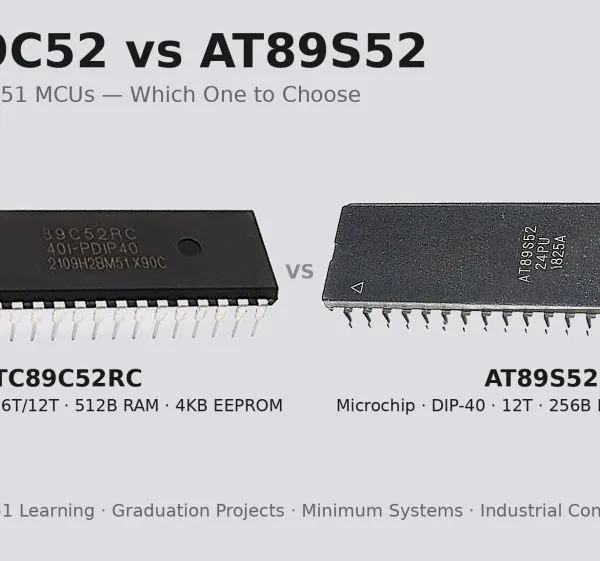 Read More

Contact Us
Recommended Products
-
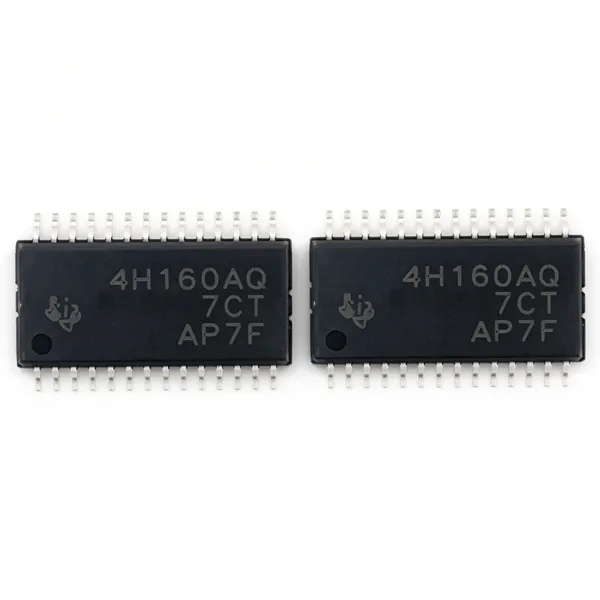
 TPS4H160BQPWPRQ1 Original TI Automotive Quad-Channel 160mOhm Smart High-Side Switch HTSSOP-28NegotiableMOQ: 100 Units
-
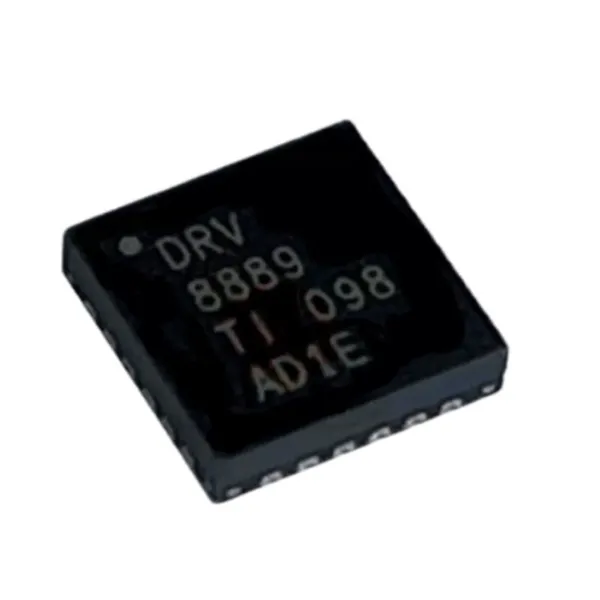
DRV8889QWRGERQ1 Original TI Automotive Stepper Motor Driver 2.4A 45V VQFN-24NegotiableMOQ: 100 Units
-
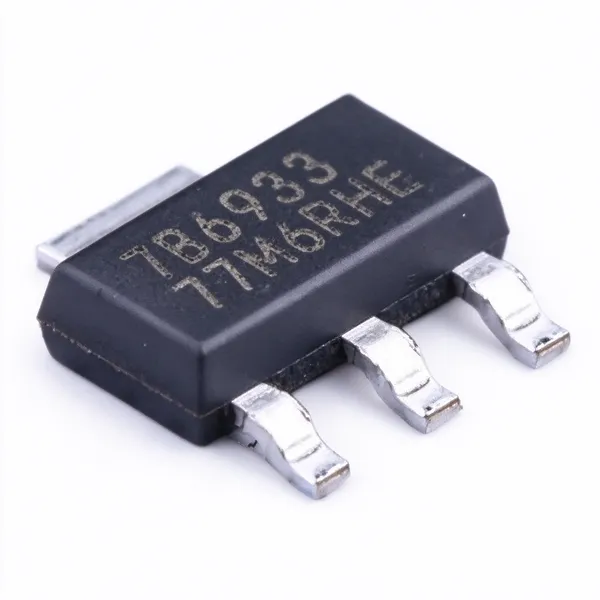
TPS7B6933QDCYRQ1 Original TI Automotive 3.3V 150mA 40V LDO Linear Regulator SOT-223NegotiableMOQ: 100 Units
-
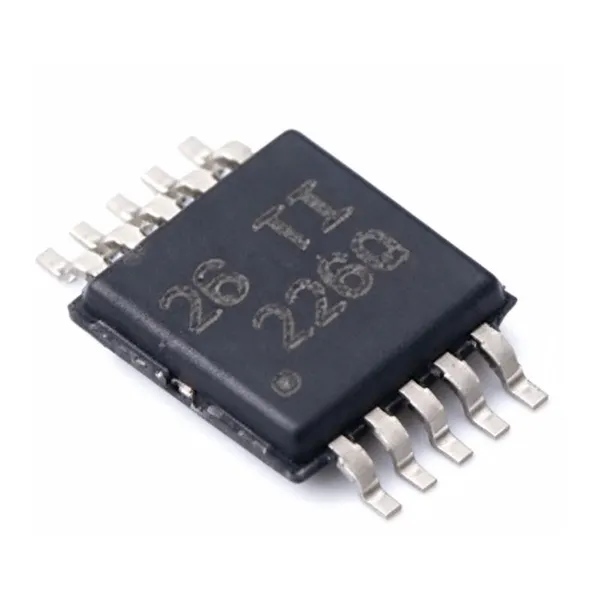
INA226AQDGSRQ1 Original TI Automotive 36V 16-Bit I2C Current Power Monitor VSSOP-10NegotiableMOQ: 100 Units
-
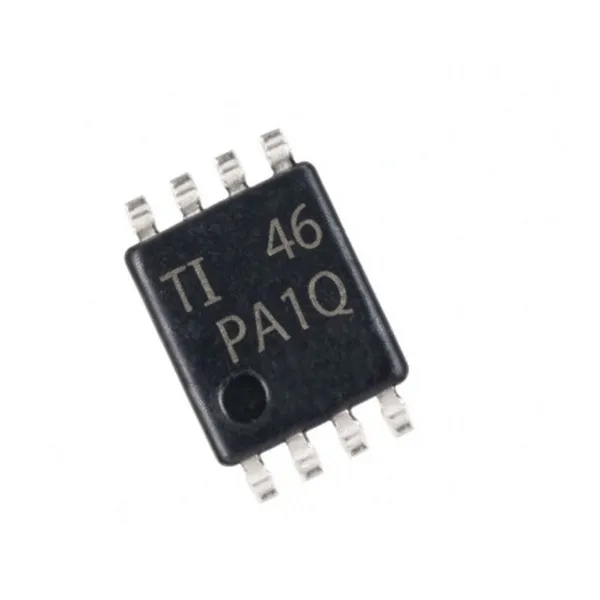
TPS7A6650QDGNRQ1 Original TI Automotive 150mA 40V LDO Linear Regulator 5V Fixed Output HVSSOP-8NegotiableMOQ: 100 Units
-
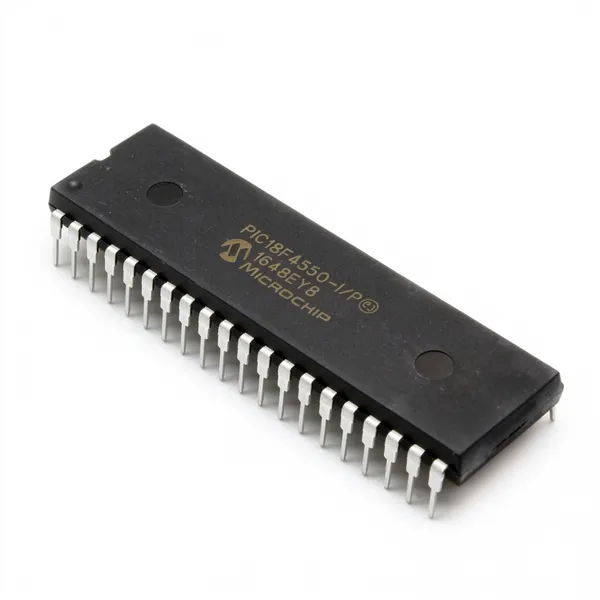
Microchip PIC18F4550-I/P 8-Bit MCU 48MHz 32KB Flash USB 2.0 DIP-40NegotiableMOQ: 100 Units
-
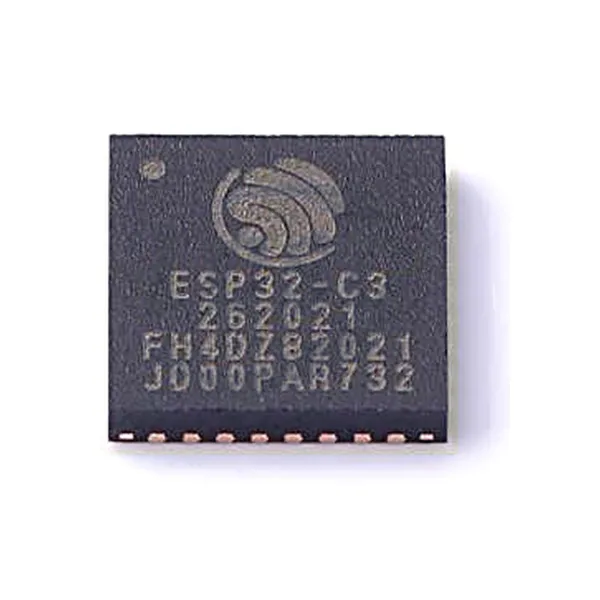
Espressif ESP32-C3 RISC-V WiFi Bluetooth LE Microcontroller 160MHz 400KB SRAM QFN-32NegotiableMOQ: 100 Units
-
ESP32-C6 RISC-V WiFi 6 + Bluetooth 5.3 LE + Zigbee/Thread SoC 160MHz 512KB SRAM QFN-40 IoT Smart HomeNegotiableMOQ: 100 Units
-
NRF52840 Nordic Bluetooth 5.3 SoC Cortex-M4F 64MHz 1MB Flash 256KB RAM AQFN-73NegotiableMOQ: 100 Units
-
AM3358 TI Sitara AM3358BZCZ100 ARM Cortex-A8 Processor 1GHz BGA-324NegotiableMOQ: 100 Units
-
ADS1115 Texas Instruments ADS1115IDGSR 16-Bit ADC 860 SPS PGA I2C VSSOP-10NegotiableMOQ: 100 Units
-
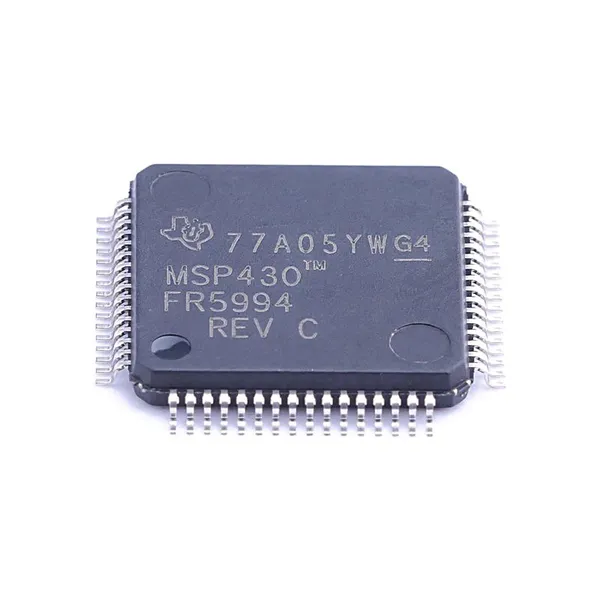
MSP430FR5994 TI MSP430FR5994IPM Ultra-Low-Power MCU 16MHz 256KB FRAM LEA LQFP-64NegotiableMOQ: 100 Units
-
Espressif ESP32-WROOM-32D WiFi Bluetooth Module Dual-Core 240MHz 4MB Flash PCB Antenna IoTNegotiableMOQ: 100 Units
-
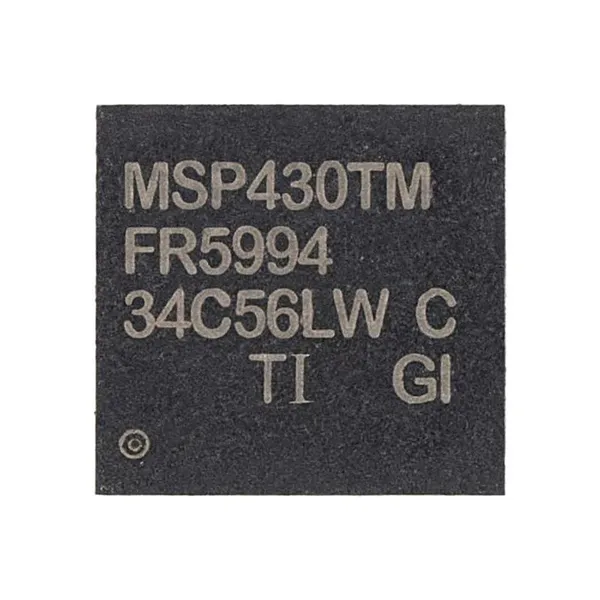
MSP430FR5994 TI MSP430FR5994IRGC Ultra-Low-Power MCU 16MHz 256KB FRAM LEA VQFN-64NegotiableMOQ: 100 Units
-
ATtiny85-20PU 8-Bit AVR Microcontroller 20MHz 8KB Flash 512B SRAM DIP-8NegotiableMOQ: 100 Units
-
Microchip ATmega2560-16AU AVR 8-Bit MCU 16MHz 256KB Flash 8KB SRAM TQFP-100NegotiableMOQ: 100 Units
-
Nordic Semiconductor NRF52832-QFAA Bluetooth 5 SoC ARM Cortex-M4F 64MHz 512KB Flash 64KB RAM QFN-48NegotiableMOQ: 100 Units
-
ATmega32U4-AU Microchip 8-Bit AVR MCU 16MHz 32KB Flash 2.5KB SRAM USB TQFP-44NegotiableMOQ: 100 Units
-
Microchip PIC16F877A-I/P 8-bit PIC MCU 20MHz 14KB Flash 368B RAM DIP-40NegotiableMOQ: 100 Units
-
STMicroelectronics STM32F103C8T6 ARM Cortex-M3 MCU 72MHz 64KB Flash 20KB SRAM LQFP-48NegotiableMOQ: 100 Units