 Business License

Sitara Processors: AM335x vs AM62x vs AM57x | Selection Guide
By QIXINWEI | TI Sitara | Industrial Processors
Key Takeaways
TI Sitara is the processor family behind a huge share of industrial Linux devices, from HMI panels and gateways to PLCs and medical terminals. The family spans from the single-core Cortex-A8 AM335x to the quad-core Cortex-A53 AM62x and the dual Cortex-A15 plus DSP AM57x.
For new designs, the AM62x is the default choice: quad-core Cortex-A53 up to 1.4GHz, Cortex-M4F companion core, DDR4 with ECC, dual Gigabit Ethernet, and a 10-plus-year lifecycle from TI.
The AM335x is still the right pick for cost-sensitive legacy designs and for products that depend on its two PRU-ICSS real-time units, but it is a decade-old Cortex-A8 and new projects should plan migration.
The AM57x is the performance option when the design needs DSP, dual displays, USB 3.0, PCIe, or SATA, and the AM65x is the choice for multi-port Gigabit industrial Ethernet and functional safety.
QIXINWEI supplies original TI Sitara processors and the full BOM around them, from DDR memory and eMMC to PMICs and connectors, with bulk supply and BOM matching.
What Sitara Is
Sitara is Texas Instruments' family of Arm application processors for industrial and embedded Linux products. Unlike a microcontroller, a Sitara processor runs a full operating system, usually Linux, and drives displays, networks, and storage. Unlike a consumer application processor from a phone, a Sitara part is built for a 10-plus-year product life, industrial temperature ranges, and the interfaces factories actually use: CAN, RS-485, industrial Ethernet, and real-time I/O.
The family covers a wide range. At the low end sits the AM335x, a single-core Cortex-A8 that has powered industrial boards for over a decade. At the high end sits the AM57x, a dual Cortex-A15 with two C66x DSP cores for vision and analytics. In the middle, the newest mainstream family is the AM62x, a quad-core Cortex-A53 design that TI positions as the successor to the AM335x for new industrial Linux products.
What holds the family together is the PRU, the Programmable Real-Time Unit. The PRU is a small deterministic 32-bit core inside the chip that handles time-critical I/O independently of Linux. It is what lets a Sitara processor speak EtherCAT, PROFINET, and other industrial Ethernet protocols in software, and what makes the family popular in motor control and real-time data acquisition. The number of PRU units varies by family, and it is often the deciding factor in a selection.
Sitara Family at a Glance
AM335x: Single-core ARM Cortex-A8 up to 1GHz, up to 2000 DMIPS, PowerVR SGX530 GPU, LPDDR1/DDR2/DDR3/DDR3L memory, LCD controller, Gigabit EMAC, 2x CAN, USB OTG, 2x PRU-ICSS, Linux and Android support.
AM437x: Single-core ARM Cortex-A9 up to 1GHz, up to 2500 DMIPS, PowerVR SGX530 GPU, LPDDR2/DDR3/DDR3L, two-port Gigabit Ethernet switch, 4x PRU-ICSS, dual camera support, secure boot.
AM57x: Dual ARM Cortex-A15 up to 1.5GHz plus dual C66x DSP up to 750MHz and quad ARM Cortex-M4, up to 10500 DMIPS, dual PowerVR SGX544 GPU, DDR3/DDR3L, two-port Gigabit Ethernet switch, 4x PRU-ICSS, USB 3.0, PCIe, SATA.
AM62x: Single, dual, or quad ARM Cortex-A53 up to 1.4GHz plus ARM Cortex-M4F up to 400MHz, up to 12880 DMIPS, DDR4/LPDDR4/DDR3L up to 32GB with ECC, 2x Gigabit Ethernet, MIPI-CSI camera input, dual display (DPI and LVDS), Linux and TI-RTOS support, 10-plus-year lifecycle.
AM65x: Dual or quad ARM Cortex-A53 up to 1.1GHz plus dual ARM Cortex-R5F in an isolated safety domain, up to 10120 DMIPS, DDR4/LPDDR4/DDR3L up to 32GB with ECC, Gigabit Ethernet port, 3x PRU-ICSSG giving six Gigabit Ethernet ports, PCIe Gen3, USB 3.0, secure boot with device management security controller.
AM335x vs AM62x: The Migration Decision
This is the comparison most design teams are making right now. The AM335x has been on the market for over ten years and is embedded in countless industrial products. The AM62x is TI's designated successor, and the two differ in almost every dimension that matters.
CPU: AM335x is a single-core Cortex-A8 at 1GHz. AM62x is single, dual, or quad Cortex-A53 at up to 1.4GHz, plus a Cortex-M4F companion core at 400MHz. In benchmark terms the AM62x delivers roughly 2.6 times the integer performance and 3.6 times the floating-point performance of the AM335x.
Memory: AM335x supports LPDDR1, DDR2, and DDR3/DDR3L. AM62x moves to DDR4 and LPDDR4 with ECC support, up to 32GB, which matters for reliability in unattended industrial equipment.
Display: AM335x drives a single display up to 1080p30 over RGB. AM62x drives two displays, up to 2K resolution, over DPI and LVDS, with a 3D GPU roughly five times more capable.
Connectivity: AM335x has six UARTs, two CAN ports, three I2C, and two SPI. AM62x has nine UARTs, three CAN-FD ports, six I2C, four SPI, OSPI/QSPI, and MIPI-CSI camera input.
Real-time: AM335x has two PRU-ICSS units. The AM62x has two PRU units on selected variants (AM62xxAxC). Designs that depend heavily on PRU-based industrial Ethernet should check the exact AM62x variant before migrating.
Lifecycle: AM62x carries a 10-plus-year lifecycle commitment from TI. AM335x remains available, but new designs that expect a decade of production should start on AM62x.
The practical rule: keep the AM335x for existing products and for cost-sensitive designs that already work. Start every new industrial Linux design on the AM62x unless the design needs DSP or multi-port Gigabit Ethernet, in which case look at the AM57x or AM65x.
When to Choose Each Sitara Family
Choose AM335x when
The product is already designed around it, the volumes are cost-sensitive, and the design depends on the two PRU-ICSS units for industrial Ethernet or real-time I/O. The AM335x remains the cheapest way into a Linux-capable industrial processor, and the BeagleBone ecosystem gives it an enormous base of reference designs and community support.
Choose AM62x when
The design is new, runs Linux, and needs a modern HMI, a gateway, a smart terminal, or an edge device with a 10-plus-year production life. The quad-core Cortex-A53, DDR4 with ECC, dual display, and low power consumption make it the best general-purpose Sitara choice for new industrial products.
Choose AM57x when
The design needs real processing power: machine vision, analytics, medical imaging, or robotics. The dual Cortex-A15 plus dual C66x DSP, USB 3.0, PCIe, and SATA put it in a different class from the AM62x, at higher power consumption.
Choose AM65x when
The design is a networked industrial device with multiple Gigabit Ethernet ports, such as a data concentrator, a grid infrastructure node, or a motor drive with functional safety requirements. The three PRU-ICSSG units give six Gigabit Ethernet ports, and the isolated Cortex-R5F safety domain supports safety-critical designs.
What Else Goes on a Sitara BOM
A Sitara processor never ships alone. The supporting BOM is where most of the cost and most of the supply risk sit, and it is worth planning early.
Memory: DDR3 or DDR4 DRAM, usually 512MB to 2GB, plus eMMC or NAND flash for the operating system and application storage.
Power: A dedicated PMIC, such as TI's TPS65218 for the AM335x or the TPS65219 for the AM62x, plus the discrete regulators and sequencers around it.
Connectivity: Gigabit Ethernet PHYs, CAN transceivers, RS-485 transceivers, and USB protection parts.
Clocking and reset: Crystals, oscillators, and reset supervisor ICs.
Storage and expansion: microSD slots, eMMC, and connectors for displays and debug interfaces.
Because Sitara designs have long production lives, the supporting parts need the same lifecycle discipline as the processor itself. A PMIC or PHY that goes end-of-life halfway through a product's run forces a board redesign. QIXINWEI checks lifecycle status across the whole BOM, not just the processor, before committing to a supply plan.
Sitara FAQ
What is the TI Sitara processor family?
Sitara is Texas Instruments' family of Arm application processors for industrial embedded Linux products. It spans the single-core Cortex-A8 AM335x, the quad-core Cortex-A53 AM62x, the dual Cortex-A15 plus DSP AM57x, and the safety-oriented AM65x, all sharing industrial interfaces and long product lifecycles.
Is the AM62x a replacement for the AM335x?
Yes, TI positions the AM62x as the successor to the AM335x for new designs. It is roughly 2.6 times faster in integer workloads, adds DDR4 with ECC, dual displays, and a 10-plus-year lifecycle. The main migration check is the PRU: the AM335x has two PRU-ICSS units, and only selected AM62x variants include PRU, so designs that rely on PRU-based industrial Ethernet need to verify the exact variant.
What is the PRU in a Sitara processor?
The PRU, or Programmable Real-Time Unit, is a small deterministic 32-bit core inside the Sitara chip that handles time-critical I/O independently of Linux. It is used to implement industrial Ethernet protocols such as EtherCAT and PROFINET in software, and for precise motor control and data acquisition timing.
Which Sitara processor is best for an industrial HMI?
For a new HMI design, the AM62x is the best choice: quad-core Cortex-A53, dual display support up to 2K, DDR4 with ECC, and low power. For a cost-sensitive HMI with an existing AM335x design, the AM335x remains viable. For a high-end HMI with vision or analytics, look at the AM57x.
How long is the Sitara lifecycle?
TI commits to 10-plus-year lifecycles for the AM62x family, and the AM335x has already been in production for over a decade. Long lifecycle is one of the main reasons industrial customers choose Sitara over consumer application processors.
What operating systems run on Sitara?
Linux is the primary operating system across the Sitara family, with TI providing Processor SDK Linux. The AM62x also supports TI-RTOS on the Cortex-M4F core, and the AM335x has historically run Android, FreeRTOS, and other RTOS options depending on the design.
Sourcing Sitara Processors from QIXINWEI
QIXINWEI supplies original TI Sitara processors across the AM335x, AM437x, AM57x, AM62x, and AM65x families, along with the complete supporting BOM: DDR memory, eMMC and NAND flash, PMICs, Ethernet PHYs, CAN transceivers, and connectors. As a full-range electronic components distributor with BOM matching service, QIXINWEI consolidates the processor and its supporting parts into a single shipment, checks lifecycle status across the whole BOM, and supports prototype quantities through production volumes. For a quotation or availability check, contact the QIXINWEI sales team with the processor part number, target quantity, and production schedule.
Supplier: Shenzhen Qixinwei Technology Co., Ltd. (QIXINWEI)
Website: https://www.qixinwei-pcba.com/
Recently Posted
-
INA226AQDGSRQ1: A 16-Bit Current and Power Monitor for Automotive Power Rails
November 20, 2026A power rail in an automotive system is only as reliable as the measurement behind it. When a battery management system, an ADAS d Read More
-
ATmega32U4-AU: Microchip 8-Bit AVR MCU with Native USB
November 18, 2026Key TakeawaysWhat it is: The ATmega32U4-AU is Microchip's 8-bit AVR microcontroller with a built-in USB 2.0 device controller, Read More
-
DRV8889QWRGERQ1: TI Automotive Stepper Driver with 1/256 Microstepping
November 14, 2026Key TakeawaysThe DRV8889QWRGERQ1 is a Texas Instruments AEC-Q100 qualified stepper motor driver for automotive bipolar stepper mot Read More
-
STC89C52 vs AT89S52: Two Classic 8051 MCUs — Which One Should You Choose?
November 12, 2026By QIXINWEI | STC89C52 vs AT89S52 | Classic 8051 MCU ComparisonThe STC89C52 and the AT89S52 look alike on paper: the same name str Read More

Contact Us
Recommended Products
-
 TPS4H160BQPWPRQ1 Original TI Automotive Quad-Channel 160mOhm Smart High-Side Switch HTSSOP-28NegotiableMOQ: 100 Units
-
DRV8889QWRGERQ1 Original TI Automotive Stepper Motor Driver 2.4A 45V VQFN-24NegotiableMOQ: 100 Units
-
TPS7B6933QDCYRQ1 Original TI Automotive 3.3V 150mA 40V LDO Linear Regulator SOT-223NegotiableMOQ: 100 Units
-
INA226AQDGSRQ1 Original TI Automotive 36V 16-Bit I2C Current Power Monitor VSSOP-10NegotiableMOQ: 100 Units
-
TPS7A6650QDGNRQ1 Original TI Automotive 150mA 40V LDO Linear Regulator 5V Fixed Output HVSSOP-8NegotiableMOQ: 100 Units
-
Microchip PIC18F4550-I/P 8-Bit MCU 48MHz 32KB Flash USB 2.0 DIP-40NegotiableMOQ: 100 Units
-
Espressif ESP32-C3 RISC-V WiFi Bluetooth LE Microcontroller 160MHz 400KB SRAM QFN-32NegotiableMOQ: 100 Units
-
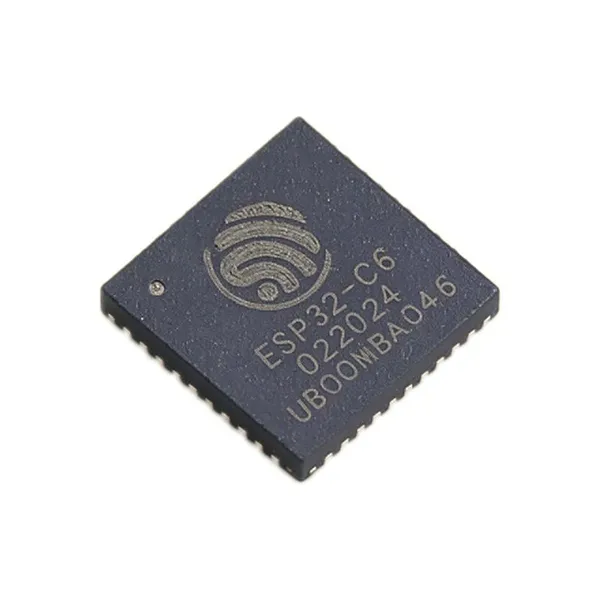
ESP32-C6 RISC-V WiFi 6 + Bluetooth 5.3 LE + Zigbee/Thread SoC 160MHz 512KB SRAM QFN-40 IoT Smart HomeNegotiableMOQ: 100 Units
-
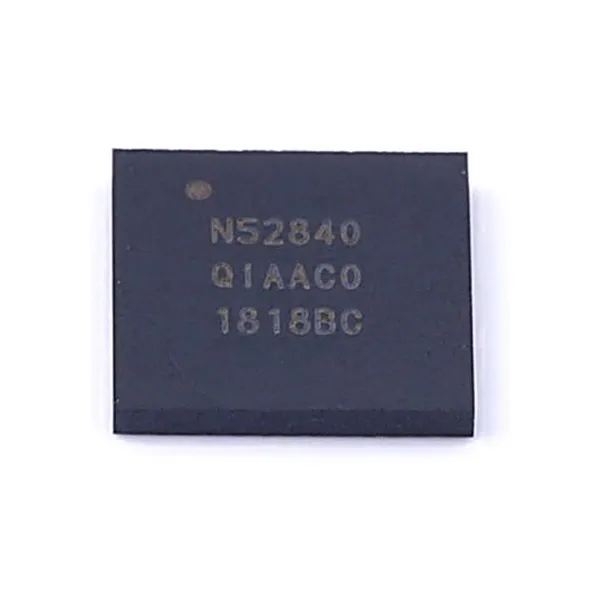
NRF52840 Nordic Bluetooth 5.3 SoC Cortex-M4F 64MHz 1MB Flash 256KB RAM AQFN-73NegotiableMOQ: 100 Units
-
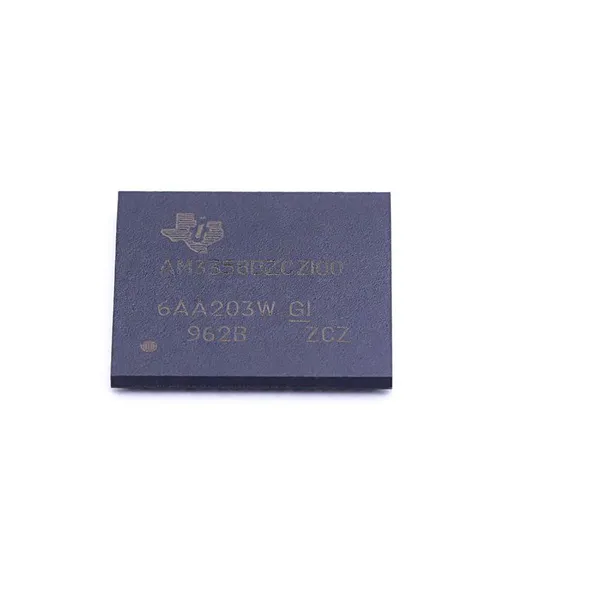
AM3358 TI Sitara AM3358BZCZ100 ARM Cortex-A8 Processor 1GHz BGA-324NegotiableMOQ: 100 Units
-
ADS1115 Texas Instruments ADS1115IDGSR 16-Bit ADC 860 SPS PGA I2C VSSOP-10NegotiableMOQ: 100 Units
-
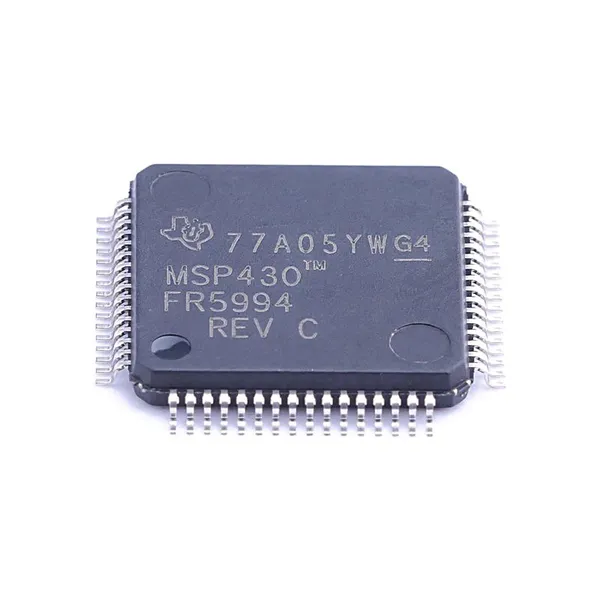
MSP430FR5994 TI MSP430FR5994IPM Ultra-Low-Power MCU 16MHz 256KB FRAM LEA LQFP-64NegotiableMOQ: 100 Units
-
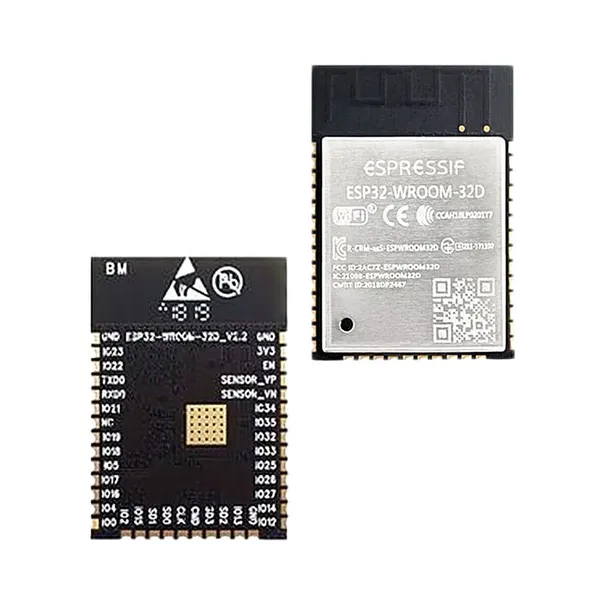
Espressif ESP32-WROOM-32D WiFi Bluetooth Module Dual-Core 240MHz 4MB Flash PCB Antenna IoTNegotiableMOQ: 100 Units
-
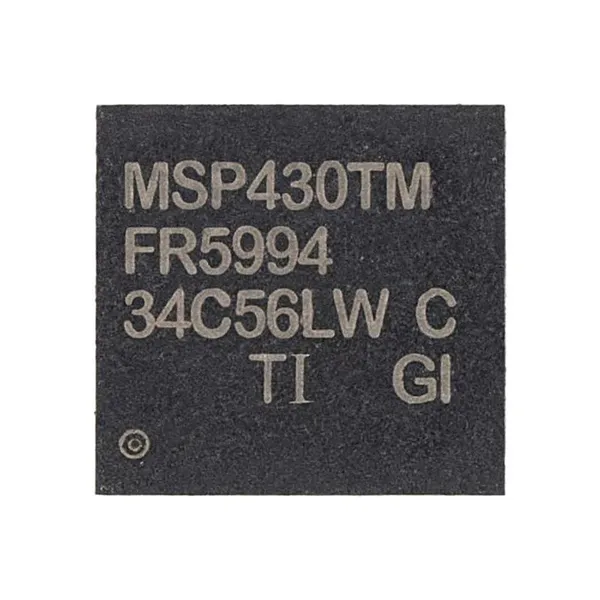
MSP430FR5994 TI MSP430FR5994IRGC Ultra-Low-Power MCU 16MHz 256KB FRAM LEA VQFN-64NegotiableMOQ: 100 Units
-
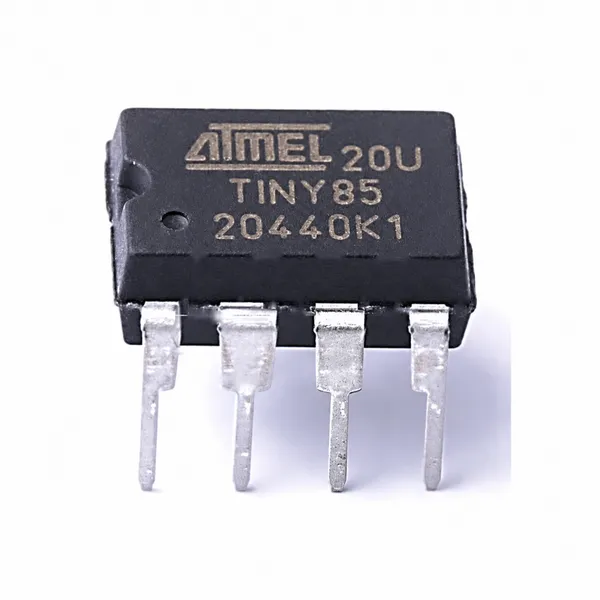
ATtiny85-20PU 8-Bit AVR Microcontroller 20MHz 8KB Flash 512B SRAM DIP-8NegotiableMOQ: 100 Units
-
Microchip ATmega2560-16AU AVR 8-Bit MCU 16MHz 256KB Flash 8KB SRAM TQFP-100NegotiableMOQ: 100 Units
-
Nordic Semiconductor NRF52832-QFAA Bluetooth 5 SoC ARM Cortex-M4F 64MHz 512KB Flash 64KB RAM QFN-48NegotiableMOQ: 100 Units
-
ATmega32U4-AU Microchip 8-Bit AVR MCU 16MHz 32KB Flash 2.5KB SRAM USB TQFP-44NegotiableMOQ: 100 Units
-
Microchip PIC16F877A-I/P 8-bit PIC MCU 20MHz 14KB Flash 368B RAM DIP-40NegotiableMOQ: 100 Units
-
STMicroelectronics STM32F103C8T6 ARM Cortex-M3 MCU 72MHz 64KB Flash 20KB SRAM LQFP-48NegotiableMOQ: 100 Units