 Business License

ICM-42688-P: 6-Axis IMU for FPV Drones & Robotics | Cases & Sourcing
Key Takeaways
What it is: The ICM-42688-P is TDK InvenSense's high-precision 6-axis IMU, combining a 3-axis gyroscope and a 3-axis accelerometer in a 2.5 x 3 mm LGA package.
Why it leads: Its gyro noise of just 2.8 mdps/√Hz is the lowest in its class, which is why it is the default gyro on FPV drone flight controllers and the reference IMU that Betaflight developers target.
Sampling: Output data rates up to 32 kHz for both gyro and accelerometer, with a native 8 kHz gyro rate that syncs exactly with an 8 kHz PID loop.
Real cases: SpeedyBee F405 V4 and V5, Holybro Kakute F722, Foxeer F722 V4, GEPRC Taker F722, and Pilotix F405 V3 flight controllers all ship with the ICM-42688-P. It also powers 4K/8K camera gimbals and TDK and Microchip's distributed robotics sensor platform.
What to watch: The part is more sensitive to hard-mount vibration than the older MPU6000, so soft-mounting is not optional. Its popularity also makes it a frequent target for relabeled parts, so source genuine TDK silicon.
Where to buy: QIXINWEI supplies ICM-42688-P in bulk with BOM sourcing support. Send your BOM for a fast quote.
What Is the ICM-42688-P?
The ICM-42688-P is a 6-axis MEMS MotionTracking device from TDK InvenSense. It packs a 3-axis gyroscope and a 3-axis accelerometer into a single 14-pin LGA package measuring just 2.5 x 3 x 0.91 mm. A host processor talks to it over I3C, I2C, or SPI, and a 2 kB FIFO lets the host burst-read sensor data and then sleep to save power.
This part did not become famous by accident. For years the MPU6000 ruled FPV flight controllers, but TDK discontinued it and remaining stock is dwindling. Most new flight controller boards moved to the ICM-42688-P for its lower noise and higher data rates. Betaflight 4.5 and later was designed around it, and it is now the gold standard IMU for FPV. The same low noise that steadies a racing quad also serves camera gimbals, robots, AR/VR controllers, wearables, and industrial IoT nodes.
Specifications
Manufacturer: TDK InvenSense
Sensor type: 6-axis IMU, 3-axis gyroscope + 3-axis accelerometer
Gyroscope noise: 2.8 mdps/√Hz, the lowest in its class
Accelerometer noise: 70 µg/√Hz (X/Y 65 µg/√Hz, Z 70 µg/√Hz)
Gyroscope full-scale range: ±15.625, ±31.25, ±62.5, ±125, ±250, ±500, ±1000, ±2000 dps
Accelerometer full-scale range: ±2, ±4, ±8, ±16 g
Output data rate: up to 32 kHz for gyro and accelerometer, with a native 8 kHz gyro rate
ADC: on-chip 16-bit, 20-bit data format in FIFO (19-bit gyro, 18-bit accel)
FIFO: 2 kB
Host interface: I3C up to 12.5 MHz, I2C up to 1 MHz, SPI up to 24 MHz
Supply voltage: VDD and VDDIO 1.71 to 3.6 V
Low-noise 6-axis current: 0.88 mA
External clock input: 31 to 50 kHz, improves device-to-device consistency and reduces drift over temperature
APEX motion functions: pedometer, tilt detection, tap detection, wake on motion, raise to wake/sleep, significant motion detection
Package: 14-pin LGA, 2.5 x 3 x 0.91 mm
Operating temperature: -40°C to +85°C
Shock tolerance: 20,000 g
Why the ICM-42688-P Became the FPV Standard
Three numbers explain why flight controller designers standardized on this part. First, the gyro noise of 2.8 mdps/√Hz is nearly half the MPU6000's roughly 5 mdps/√Hz, so the flight controller sees a cleaner signal before any filtering. Second, the native 8 kHz gyro output rate matches an 8 kHz PID loop sample for sample, so the control loop runs without interpolation or dropped samples. Third, the programmable anti-alias filter and the deep 2048-byte FIFO let the designer tune the frequency response and buffer bursts without overrun risk.
The practical result is that pilots can run the lightest filtering. A typical Betaflight tune on this gyro uses a 300 Hz gyro low-pass filter, a 400 Hz second low-pass filter, and a dynamic notch, and still holds a clean tune. That light filtering keeps latency low, which is what makes a quad feel locked in during fast maneuvers.
There is one trade-off to respect. The ICM-42688-P is more sensitive to hard-mount vibration coupling than the older MPU6000, which smoothed vibration out passively. A clean gyro on a hard-mounted stack in a noisy frame will fly worse than an older part on proper grommets. Soft-mounting is not optional with this gyro. Flight controller makers know this, which is why current boards ship with grommet-mounted stacks as standard.
Application Case 1: FPV Drone Flight Controllers
This is the flagship application and the largest single source of demand for the ICM-42688-P. Nearly every current-generation FPV flight controller uses it as the primary gyro, and the boards below show how widely it has spread across price points and use cases.
SpeedyBee F405 V4 stack. The value reference for a first 5-inch build. It pairs an STM32F405 MCU with the ICM-42688-P gyro, an AT7456E analog OSD chip, a built-in barometer, a microSD blackbox, and Bluetooth configuration, running on 3S to 6S input with a 30.5 x 30.5 mm mounting pattern.
SpeedyBee F405 V5 stack. The latest SpeedyBee stack, built around the STM32F405 MCU with the ICM42688P gyro and a 55A 4-in-1 ESC, aimed at FPV racing drones, freestyle quadcopters, and professional UAV builds, with an independent LDO power supply for MCU and gyro stability.
SpeedyBee F405 Mini stack. The same F405 MCU and ICM-42688P gyro in a compact 20 x 20 mm form for ultralight 5-inch builds, 4-inch long range, and 3-inch cinewhoops, with a 35A 4-in-1 ESC, up to 6S input, and DJI O3 compatibility.
Holybro Kakute F722. A high-performance flight controller built on the STM32F722 MCU at 216 MHz with the ICM42688P gyroscope over SPI, a BMP280 barometer, and native Betaflight and INAV support, aimed at freestyle, cinematic, and long-range drone builds, and compatible with DJI Air Unit, Caddx Vista, and HDZero digital FPV systems.
Foxeer F722 V4. A mid-range pick that ships in two gyro versions, ICM-42688-P or MPU6000, so buyers must read the listing rather than trust the model name. It carries an STM32F722RET6 MCU, 16 MB of blackbox flash, a DPS310 barometer, up to six UARTs, and 4S to 6S input at 7.7 g.
GEPRC Taker F722 BLS 50A stack. A mid-range stack for builds going straight into a DJI air unit, with the ICM42688-P over SPI, an AT7456E OSD, 16 MB of blackbox flash, five UART groups, independent 5V/3A and 9V/2.5A rails, a 50A ESC, and 3S to 6S input.
Pilotix F405 V3 ICM42688. A European-designed flight controller built around the STM32F405 MCU and the ICM42688-P gyroscope connected via SPI, running Betaflight on a 36 x 36 mm board weighing 9.6 g, with dual BEC outputs at 5V/2.5A and 9V/2.5A, a built-in barometer, a magnetometer, and an analog OSD.
What the case proves. The same gyro serves a $30 value stack and a premium long-range build because the requirement is identical: clean angular-rate data at high speed. The ICM-42688-P delivers it at a price that keeps the board affordable, which is why it displaced the MPU6000 across the whole market rather than only at the top end. The cost premium is real, roughly $5 to $15 more per flight controller than an MPU6000 equivalent, but buyers pay it for the lower noise and the Betaflight reference tuning.
Application Case 2: Camera Gimbal Stabilization for 4K/8K Video
A camera gimbal has one job: hold the camera steady while the platform moves. That job is a gyro problem. The gimbal controller reads angular rate, computes the correction, and drives the motors, hundreds of times per second. Any noise in the gyro reading becomes jitter in the footage.
The ICM-42688-P fits this role because its 2.8 mdps/√Hz gyro noise keeps the attitude estimate clean even during fast pans and vibration from the drone or vehicle carrying the camera. Cinematography rigs rely on its stability to deliver ultra-smooth gimbal stabilization for 4K and 8K video capture, where even small angular errors are visible at full resolution. The 32 kHz output data rate gives the gimbal control loop headroom to react before a vibration becomes visible, and the 20,000 g shock tolerance protects the sensor when the rig takes a knock in the field.
For a gimbal designer, the practical checklist is short: feed the gyro a clean 3.3 V supply, keep the sensor away from motor vibration with a damped mount, and use the SPI interface at 24 MHz so the control loop is never waiting on the bus. The same low-noise, high-rate combination that steadies a racing quad steadies a cinema camera.
Application Case 3: Robotics and Distributed Sensor Nodes
In November 2026, TDK and Microchip Technology demonstrated a distributed sensor-node platform for next-generation robotic systems at electronica in Munich. The demonstration board combines a Microchip dsPIC33A digital signal controller, LAN8651 and LAN8679 10BASE-T1S single-pair Ethernet connectivity, a TDK InvenSense ICM-42688-P 6-axis IMU, and a MikroE expansion connector for additional TDK sensors. The dsPIC33A processes and fuses the IMU data locally before transmitting the relevant information over the 10BASE-T1S network.
The platform targets robotic applications that need motion intelligence at the edge rather than in a central computer: robot orientation and proprioception, joint-motion monitoring, motion stabilization, vibration monitoring, gesture recognition, distributed condition monitoring, positioning and articulation, and autonomy and safety. The ICM-42688-P is the sensing element in that chain because its integrated sensor fusion engine delivers ultra-low latency attitude estimation suitable for mobile robot stabilization and navigation, and its low noise keeps the orientation estimate stable during dynamic motion.
This case matters for procurement because it shows the part moving beyond hobby drones into industrial robotics, where volumes are larger and qualification cycles are longer. A robot maker that qualifies the ICM-42688-P once can reuse it across orientation sensing, joint monitoring, and vibration analysis on the same platform, which simplifies the BOM and the supply chain.
Application Case 4: AR/VR Headsets and Wearables
AR and VR headsets live or die on orientation tracking. If the headset's estimate of where the user is looking lags or drifts, the wearer feels motion sick. The ICM-42688-P serves this market through its sibling, the ICM-42688-V, which is the same hardware with TDK's Advanced Sensor Fusion library added, providing highly accurate 6-axis and 9-axis sensor fusion output for AR and VR applications.
For wearables and sports devices, the on-chip APEX motion engine does the work without waking the host processor. Pedometer, tilt detection, tap detection, wake on motion, raise to wake and sleep, and significant motion detection all run on the sensor itself, which is what lets a fitness band or smartwatch track activity for days on a small battery. The 0.88 mA low-noise 6-axis current and the 2 kB FIFO, which lets the host burst-read and then sleep, are the features that make that battery life possible.
When you specify for AR/VR, order the ICM-42688-V, not the -P. When you specify for a wearable that needs the lowest power and the APEX functions, the -P is the right part. The two share the same package and pinout, but the firmware and the fusion library are different, so the suffix on the BOM must be exact.
ICM-42688-P vs the Alternatives
ICM-42688-P: gyro noise 2.8 mdps/√Hz, max gyro range ±2000 dps, max accel range ±16 g, max ODR 32 kHz, 6-axis low-noise current 0.88 mA, FIFO 2 kB, external clock supported. The lowest-noise option and the first choice for FPV flight controllers, gimbals, and robotics.
ICM-42605: gyro noise 3.8 mdps/√Hz, max gyro range ±2000 dps, max accel range ±16 g, max ODR 8 kHz, 6-axis low-noise current 0.65 mA, FIFO 2 kB, no external clock input. Lower power and lower cost, but slower sampling and higher noise. A budget option when the control loop does not need 32 kHz.
ICM-42686-P: gyro noise 5.3 mdps/√Hz, max gyro range ±4000 dps, max accel range ±32 g, max ODR 32 kHz, 6-axis low-noise current 0.70 mA, FIFO 2 kB, external clock supported. The widest measurement range, for applications that need to survive extreme rotation and acceleration.
MPU6000: gyro noise around 5 mdps/√Hz, max gyro ODR 8 kHz, FIFO 512 bytes. The legacy FPV gyro from 2013. TDK discontinued it and remaining stock is dwindling. Most new flight controller designs have already moved to the ICM-42688-P. Only specify the MPU6000 if you are maintaining an existing design that was validated on it.
BMI270: gyro noise below 7 mdps/√Hz in low-noise performance mode, max gyro ODR 6.4 kHz, FIFO 1024 bytes. A capable mid-generation IMU from Bosch, adequate for cruisers and whoops, but its lower output data rate makes it the weakest of the three for demanding racing.
All three ICM-42688 family parts share the same 14-pin LGA 2.5 x 3 mm package, the same -40°C to +85°C range, the same 1.71 to 3.6 V supply, and the same I2C, SPI, and I3C interfaces. If your priority is the cleanest gyro signal for flight control or stabilization, pick the ICM-42688-P. If you need the widest range, pick the ICM-42686-P. If power and cost matter more than sampling speed, the ICM-42605 is the budget option.
How to Choose the Right IMU
Start with noise, not price. For flight control and stabilization, gyro noise density is the number that matters most. A noisy gyro forces the flight controller to filter harder, which adds latency and hurts stability. The ICM-42688-P at 2.8 mdps/√Hz needs the lightest filtering of any IMU in this class.
Match the output data rate to your control loop. The ICM-42688-P samples up to 32 kHz and offers a native 8 kHz gyro rate that syncs exactly with an 8 kHz PID loop. Slower applications such as wearables can run at lower rates and save power.
Use the external clock input for multi-sensor designs. Feeding a 31 to 50 kHz clock tightens device-to-device consistency and reduces drift over temperature, which matters when several boards must behave identically in production.
Check the full-scale range against your worst case. A racing drone can exceed ±2000 dps in a hard flip. If your application regularly saturates the gyro, step up to the ICM-42686-P with its ±4000 dps range and ±32 g accelerometer.
Confirm the variant. The ICM-42688-P is the standard part. The ICM-42688-V adds TDK's Advanced Sensor Fusion library for AR/VR. The ICM-42688-PC is a cost-optimized variant with higher noise, 13 mdps/√Hz gyro and 150 µg/√Hz accel, and a 1536-byte FIFO. Make sure your BOM lists the exact suffix you need.
Plan the mounting. The ICM-42688-P is more sensitive to hard-mount vibration than the MPU6000. Budget for a grommet-mounted stack or a damped sensor mount in the mechanical design, not as an afterthought.
Common Mistakes When Buying ICM-42688-P
Mixing up the variants. ICM-42688-P, ICM-42688-V, and ICM-42688-PC are not interchangeable. The -V includes the sensor fusion library, and the -PC has different noise performance. Order by the full part number.
Accepting relabeled or recycled parts as genuine TDK. The ICM-42688-P is popular and its FPV demand makes it a frequent target for relabeled and recycled LGAs. If your design was validated on genuine TDK silicon, source genuine TDK silicon from a trusted distributor and verify the lot.
Hard-mounting the sensor. Skipping the soft mount is the most common reason a new ICM-42688-P build flies worse than the MPU6000 board it replaced. The gyro is clean, but it is also sensitive to vibration coupled through a rigid mount. Use grommets.
Ignoring the external clock. Leaving CLKIN unconnected works, but you lose the accuracy and consistency benefit that makes this part stand out in multi-board production.
Forgetting the FIFO. The 2 kB FIFO with its 20-bit data format is there to cut bus traffic and let the host sleep. Designs that poll the sensor continuously waste the power advantage.
Ordering the wrong interface assumption. The 14-pin LGA shares pins between SPI, I2C, and I3C, so the same pads change role with the interface you choose. Confirm the interface in your schematic before you route the board.
Where to Source ICM-42688-P
QIXINWEI supplies ICM-42688-P in bulk, along with the rest of your BOM. Send your full BOM list and we quote, source, and ship it in one go, including hard-to-find and obsolete parts such as the MPU6000 for legacy designs. As a Shenzhen-based distributor with 13 years in electronic components, we serve drone, robotics, AR/VR, and industrial customers worldwide, and we verify the parts we ship so you receive genuine TDK silicon.
Contact QIXINWEI at ahua@qixinweichip.com or visit www.qixinwei-pcba.com to request a quote. For a fast response, send your BOM with quantities and your target delivery date.
FAQ
What is the ICM-42688-P used for?
It is a 6-axis IMU used mainly in FPV drone flight controllers, robotics, camera gimbals, AR/VR controllers, wearables, and industrial IoT devices. FPV flight controllers are the largest single application.
How low is the gyro noise on the ICM-42688-P?
2.8 mdps/√Hz, the lowest in its class and nearly half the MPU6000's roughly 5 mdps/√Hz.
What is the difference between ICM-42688-P and ICM-42688-V?
The -P is the standard part. The -V is the same hardware bundled with TDK's Advanced Sensor Fusion library, which provides highly accurate 6-axis and 9-axis sensor fusion output for AR/VR applications.
What is the difference between ICM-42688-P and ICM-42688-PC?
The -PC is a cost-optimized variant with higher noise, 13 mdps/√Hz gyro and 150 µg/√Hz accel, and a 1536-byte FIFO. It suits consumer applications where cost matters more than the lowest noise.
What is the difference between ICM-42688-P and ICM-42686-P?
The ICM-42686-P has a wider measurement range, ±4000 dps gyro and ±32 g accel, but higher gyro noise at 5.3 mdps/√Hz. Pick the -P for the cleanest signal and the -86-P when your application needs the widest range.
Why did flight controllers move from the MPU6000 to the ICM-42688-P?
TDK discontinued the MPU6000, and the ICM-42688-P offers lower noise, a deeper 2048-byte FIFO, programmable filtering, and a native 8 kHz gyro rate that Betaflight 4.5 and later was designed around.
Does the ICM-42688-P need soft-mounting?
Yes. It is more sensitive to hard-mount vibration coupling than the MPU6000. A grommet-mounted stack or damped sensor mount is standard practice on current flight controllers.
What package does the ICM-42688-P use?
A 14-pin LGA measuring 2.5 x 3 x 0.91 mm, operating from -40°C to +85°C, with 20,000 g shock tolerance.
What interfaces does it support?
I3C up to 12.5 MHz, I2C up to 1 MHz, and SPI up to 24 MHz. The 14-pin LGA shares pins between interfaces, so the same pads change role with the interface you choose.
Can I buy ICM-42688-P in bulk?
Yes. QIXINWEI supplies ICM-42688-P in volume with BOM sourcing. Send your BOM to ahua@qixinweichip.com for a quote.
Conclusion
The ICM-42688-P earns its place on FPV flight controllers, gimbals, and robotics boards for one reason: clean data at high speed. With 2.8 mdps gyro noise, a native 8 kHz gyro rate, 32 kHz sampling, and a tiny 2.5 x 3 mm footprint, it gives your control loop the signal quality it needs without the power or size penalty. The cases in this article show the same part serving a $30 value stack and a cinema gimbal, because the requirement is identical in both: a gyro you can trust. If your design lives or dies on motion accuracy, this is the IMU to spec in, and if you mount it on grommets and source genuine TDK silicon, it will deliver.
Need ICM-42688-P in bulk? Send your BOM to QIXINWEI and get a fast quote at ahua@qixinweichip.com or www.qixinwei-pcba.com.
Recently Posted
-
INA226AQDGSRQ1: A 16-Bit Current and Power Monitor for Automotive Power Rails
November 20, 2026A power rail in an automotive system is only as reliable as the measurement behind it. When a battery management system, an ADAS d Read More
-
ATmega32U4-AU: Microchip 8-Bit AVR MCU with Native USB
November 18, 2026Key TakeawaysWhat it is: The ATmega32U4-AU is Microchip's 8-bit AVR microcontroller with a built-in USB 2.0 device controller, Read More
-
DRV8889QWRGERQ1: TI Automotive Stepper Driver with 1/256 Microstepping
November 14, 2026Key TakeawaysThe DRV8889QWRGERQ1 is a Texas Instruments AEC-Q100 qualified stepper motor driver for automotive bipolar stepper mot Read More
-
STC89C52 vs AT89S52: Two Classic 8051 MCUs — Which One Should You Choose?
November 12, 2026By QIXINWEI | STC89C52 vs AT89S52 | Classic 8051 MCU ComparisonThe STC89C52 and the AT89S52 look alike on paper: the same name str Read More

Contact Us
Recommended Products
-
 TPS4H160BQPWPRQ1 Original TI Automotive Quad-Channel 160mOhm Smart High-Side Switch HTSSOP-28NegotiableMOQ: 100 Units
-
DRV8889QWRGERQ1 Original TI Automotive Stepper Motor Driver 2.4A 45V VQFN-24NegotiableMOQ: 100 Units
-
TPS7B6933QDCYRQ1 Original TI Automotive 3.3V 150mA 40V LDO Linear Regulator SOT-223NegotiableMOQ: 100 Units
-
INA226AQDGSRQ1 Original TI Automotive 36V 16-Bit I2C Current Power Monitor VSSOP-10NegotiableMOQ: 100 Units
-
TPS7A6650QDGNRQ1 Original TI Automotive 150mA 40V LDO Linear Regulator 5V Fixed Output HVSSOP-8NegotiableMOQ: 100 Units
-
Microchip PIC18F4550-I/P 8-Bit MCU 48MHz 32KB Flash USB 2.0 DIP-40NegotiableMOQ: 100 Units
-
Espressif ESP32-C3 RISC-V WiFi Bluetooth LE Microcontroller 160MHz 400KB SRAM QFN-32NegotiableMOQ: 100 Units
-
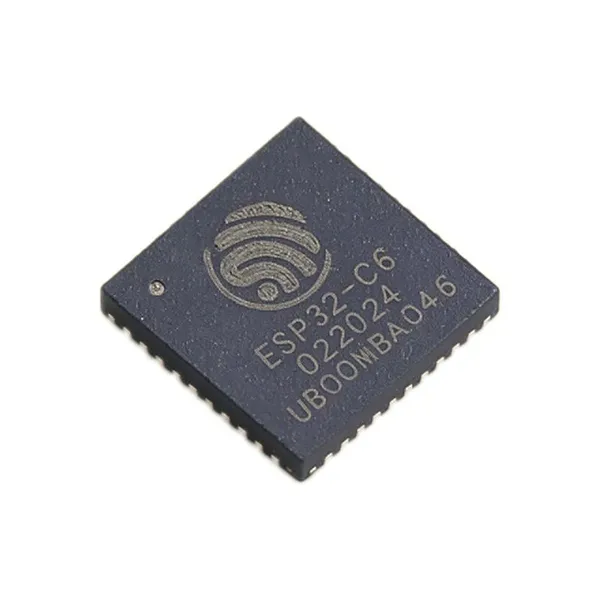
ESP32-C6 RISC-V WiFi 6 + Bluetooth 5.3 LE + Zigbee/Thread SoC 160MHz 512KB SRAM QFN-40 IoT Smart HomeNegotiableMOQ: 100 Units
-
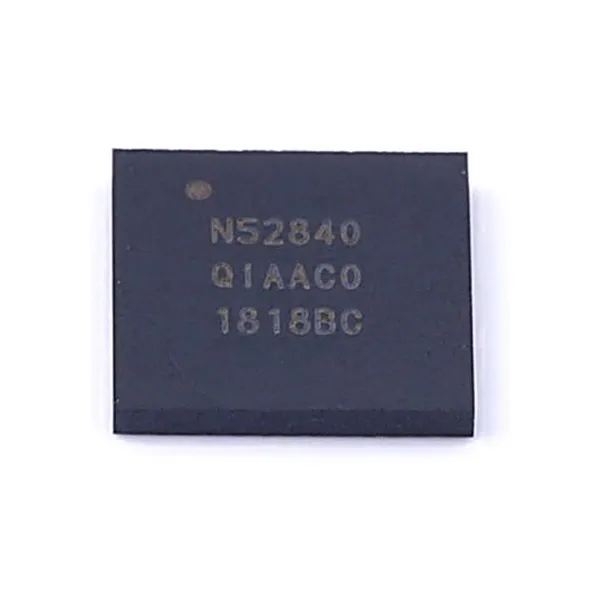
NRF52840 Nordic Bluetooth 5.3 SoC Cortex-M4F 64MHz 1MB Flash 256KB RAM AQFN-73NegotiableMOQ: 100 Units
-
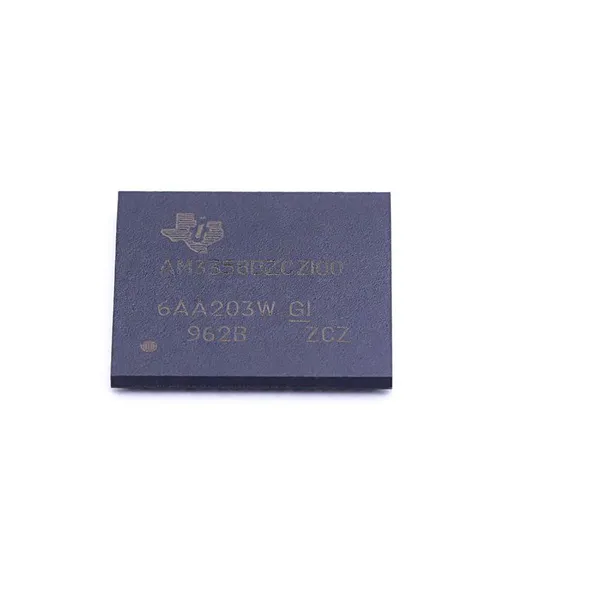
AM3358 TI Sitara AM3358BZCZ100 ARM Cortex-A8 Processor 1GHz BGA-324NegotiableMOQ: 100 Units
-
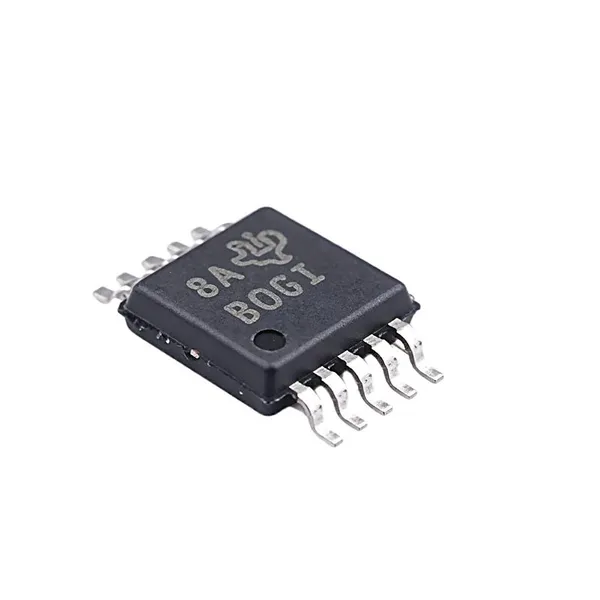
ADS1115 Texas Instruments ADS1115IDGSR 16-Bit ADC 860 SPS PGA I2C VSSOP-10NegotiableMOQ: 100 Units
-
MSP430FR5994 TI MSP430FR5994IPM Ultra-Low-Power MCU 16MHz 256KB FRAM LEA LQFP-64NegotiableMOQ: 100 Units
-
Espressif ESP32-WROOM-32D WiFi Bluetooth Module Dual-Core 240MHz 4MB Flash PCB Antenna IoTNegotiableMOQ: 100 Units
-
MSP430FR5994 TI MSP430FR5994IRGC Ultra-Low-Power MCU 16MHz 256KB FRAM LEA VQFN-64NegotiableMOQ: 100 Units
-
ATtiny85-20PU 8-Bit AVR Microcontroller 20MHz 8KB Flash 512B SRAM DIP-8NegotiableMOQ: 100 Units
-
Microchip ATmega2560-16AU AVR 8-Bit MCU 16MHz 256KB Flash 8KB SRAM TQFP-100NegotiableMOQ: 100 Units
-
Nordic Semiconductor NRF52832-QFAA Bluetooth 5 SoC ARM Cortex-M4F 64MHz 512KB Flash 64KB RAM QFN-48NegotiableMOQ: 100 Units
-
ATmega32U4-AU Microchip 8-Bit AVR MCU 16MHz 32KB Flash 2.5KB SRAM USB TQFP-44NegotiableMOQ: 100 Units
-
Microchip PIC16F877A-I/P 8-bit PIC MCU 20MHz 14KB Flash 368B RAM DIP-40NegotiableMOQ: 100 Units
-
STMicroelectronics STM32F103C8T6 ARM Cortex-M3 MCU 72MHz 64KB Flash 20KB SRAM LQFP-48NegotiableMOQ: 100 Units