 Business License

ESP32-S3: Dual-Core 240MHz Wi-Fi MCU | Specs, Guide & Sourcing
Key Takeaways
ESP32-S3 is Espressif's dual-core Xtensa LX7 microcontroller running up to 240 MHz, with 2.4 GHz Wi-Fi and Bluetooth 5 (LE) on one chip, built for IoT, voice, camera and edge AI.
It adds vector (SIMD) instructions for AI acceleration, native USB OTG, 45 GPIOs and up to 16 MB Octal PSRAM over the original ESP32.
It does not support Bluetooth Classic. If your design needs Classic Bluetooth, stay with the original ESP32.
Common modules are ESP32-S3-WROOM-1, ESP32-S3-WROOM-2 and ESP32-S3-MINI-1. Check Flash and PSRAM size in the exact part number before ordering.
QIXINWEI supplies ESP32-S3 chips and modules in bulk, with full BOM sourcing for your whole project.
What Is the ESP32-S3
The ESP32-S3 is a high-performance microcontroller (MCU) from Espressif Systems, the company behind the ESP32 family. It is the successor to the original ESP32 for AIoT products: same dual-core 240 MHz class, but with a newer LX7 core, AI vector instructions, native USB and more memory headroom.
Like other ESP32 chips, it integrates Wi-Fi and Bluetooth on a single SoC, so a product needs no separate wireless module. That is why it shows up in smart home devices, voice assistants, cameras, displays and industrial IoT gateways. With 110,000 Google searches a month, it is the most-searched ESP32 model and the default choice for new ESP32 designs that need a camera, a display, voice or on-device AI.
ESP32-S3 Specifications
Manufacturer: Espressif Systems
CPU: Dual-core Xtensa LX7 32-bit, up to 240 MHz, with single-precision FPU
ROM: 384 KB
SRAM: 512 KB
RTC SRAM: 16 KB
Flash: Up to 32 MB Octal SPI Flash (variant-dependent)
PSRAM: Up to 16 MB Octal PSRAM (variant-dependent)
Wi-Fi: 2.4 GHz 802.11b/g/n, up to 150 Mbps
Bluetooth: Bluetooth 5 (LE), Bluetooth mesh; no Bluetooth Classic
GPIO: 45 programmable GPIOs (chip level)
ADC: Two 12-bit SAR ADCs, up to 20 channels
USB: Full-speed USB OTG, USB Serial/JTAG
Interfaces: SPI, I2C, I2S, UART, LCD interface, Camera interface (DVP), PWM, pulse counter, remote control
AI Acceleration: Vector (SIMD) instructions for neural-network and DSP workloads
Operating Voltage: 3.0V to 3.6V
Operating Temperature: -40°C to +85°C
ESP32-S3 vs ESP32: What Changed
CPU: ESP32 uses dual-core Xtensa LX6; ESP32-S3 uses dual-core Xtensa LX7. Both run up to 240 MHz, but the LX7 handles instructions more efficiently and adds vector extensions.
AI Acceleration: ESP32 has no dedicated SIMD extensions; ESP32-S3 has vector (SIMD) instructions for AI and DSP workloads such as keyword spotting and small image classification.
Bluetooth: ESP32 supports Classic Bluetooth plus BLE 4.2; ESP32-S3 supports Bluetooth 5 LE only and drops Classic Bluetooth entirely.
USB: ESP32 has no built-in USB; ESP32-S3 has full-speed USB OTG plus USB Serial/JTAG, so it can act as a USB HID device.
GPIO: ESP32 has 34 GPIOs; ESP32-S3 has 45 programmable GPIOs.
ADC: ESP32 has a 12-bit SAR ADC with up to 18 channels; ESP32-S3 has two 12-bit SAR ADCs with up to 20 channels.
SRAM: ESP32 has 520 KB; ESP32-S3 has 512 KB.
PSRAM: ESP32 supports up to 4 MB; ESP32-S3 supports up to 16 MB Octal PSRAM, which matters for camera frame buffers and display buffers.
On-chip DAC: ESP32 has two on-chip DACs; ESP32-S3 does not. If your design needs an analog output from the chip itself, keep this in mind.
Best for: ESP32 fits general IoT, Bluetooth Classic and legacy designs; ESP32-S3 fits voice, camera, display, USB devices and edge AI.
ESP32-S3 vs ESP32-C3 vs ESP32-C6: Which One to Pick
ESP32-S3: Dual-core Xtensa LX7 at 240 MHz, 45 GPIOs, Bluetooth 5 LE. Pick it for voice, camera, display and on-device AI.
ESP32-C3: Single-core RISC-V at 160 MHz, 400 KB SRAM, 22 GPIOs, Wi-Fi and Bluetooth 5 LE. Pick it for low-cost connected devices where price matters more than compute.
ESP32-C6: Single-core RISC-V at 160 MHz plus a low-power core, Wi-Fi 6, Bluetooth 5 LE, Thread and Zigbee. Pick it for Matter and smart-home products that need 802.15.4.
Original ESP32: Pick it only when you need Bluetooth Classic or you are maintaining an existing design built on it.
ESP32-S3 Applications
Smart home: Voice assistants, smart displays, control panels and Matter-ready hubs.
IoT devices: Sensors, gateways and connected appliances that need Wi-Fi plus Bluetooth LE.
Edge AI: Wake-word detection, keyword spotting and basic image classification running on the device, using Espressif's ESP-DL and ESP-SR libraries.
Camera products: The hardware camera (DVP) interface plus PSRAM makes it a common choice for camera modules and video doorbells.
USB devices: USB HID keyboards, mice and custom USB gadgets through native USB OTG.
Human-machine interface: Touch displays and control screens, using the LCD interface and extra GPIOs.
Industrial IoT: Gateways, data loggers and control nodes that need reliable Wi-Fi and local processing.
How to Choose the Right ESP32-S3 Module
Most buyers order a module rather than the bare chip. The three common families are ESP32-S3-WROOM-1, ESP32-S3-WROOM-2 and ESP32-S3-MINI-1. WROOM-2 supports the largest Flash and PSRAM (up to 32 MB Octal Flash and 16 MB Octal PSRAM). MINI-1 is the small-size module for space-constrained boards.
The key is the suffix in the part number, which encodes Flash and PSRAM size. A camera or AI project needs PSRAM for frame buffers, so do not order a no-PSRAM variant for that use. A simple Wi-Fi sensor node can use a smaller Flash and PSRAM variant and save cost. Always confirm the exact Flash and PSRAM size in the module datasheet before placing a bulk order, because the same module family ships in several memory configurations.
Common Mistakes When Buying ESP32-S3
Expecting Bluetooth Classic: The ESP32-S3 has no Bluetooth Classic. If your product pairs with older Bluetooth audio gear or uses profiles such as A2DP, AVRCP or HFP, the original ESP32 is still the only option in the family.
Ordering without PSRAM for camera or AI work: Camera frame buffers and AI models need PSRAM. A module without PSRAM will run out of memory on these workloads.
Confusing chip and module GPIO counts: The chip has 45 GPIOs, but a module exposes fewer because some pins are used for Flash and PSRAM. Check the module pinout, not just the chip datasheet.
Assuming all ESP32 code ports directly: Most Arduino and ESP-IDF code ports over, but code that relies on Bluetooth Classic, the original ESP32's DACs or its specific ADC behaviour needs changes.
Where to Source ESP32-S3 in Bulk
QIXINWEI supplies ESP32-S3 chips and modules in bulk, including WROOM and MINI-1 variants, with Flash and PSRAM options confirmed before shipment. Send your BOM and target quantity for a quote with lead time. For a full project, QIXINWEI can source the whole BOM in one go: ESP32-S3 plus power management, memory, sensors, connectors and passives, so you deal with one supplier instead of many.
FAQ
What is the ESP32-S3?
It is Espressif's dual-core Xtensa LX7 microcontroller with 2.4 GHz Wi-Fi and Bluetooth 5 (LE), designed for IoT, voice, camera and edge AI. It runs up to 240 MHz with 512 KB SRAM and vector instructions for AI acceleration.
Does the ESP32-S3 support Bluetooth Classic?
No. It supports Bluetooth 5 LE only. If your design needs Classic Bluetooth, use the original ESP32.
What is the difference between ESP32-S3 and ESP32?
The S3 uses a newer LX7 core with vector (SIMD) instructions for AI, adds native USB OTG, has 45 GPIOs instead of 34, supports up to 16 MB Octal PSRAM, and drops Bluetooth Classic and the on-chip DACs.
How much memory does the ESP32-S3 have?
512 KB SRAM on-chip, plus up to 32 MB Octal Flash and up to 16 MB Octal PSRAM depending on the chip or module variant.
Which ESP32-S3 module should I choose?
Choose by Flash and PSRAM size. WROOM-2 is the largest option (up to 32 MB Flash, 16 MB PSRAM). MINI-1 is the compact option. Camera and AI projects need a PSRAM variant.
Is the ESP32-S3 still in production?
Yes. It is Espressif's current flagship for AIoT and the default choice for new ESP32 designs that need a camera, a display, voice or on-device AI.
Where can I buy ESP32-S3 in bulk?
QIXINWEI supplies ESP32-S3 chips and modules in bulk with BOM sourcing. Send your BOM for a quote with lead time.
Conclusion
The ESP32-S3 is the ESP32 to choose for new designs that need a camera, a display, voice or on-device AI. Its dual-core LX7, vector instructions, USB OTG and PSRAM headroom make it the most capable chip in the ESP32 family for those workloads. Just remember its two limits: no Bluetooth Classic and no on-chip DACs. For everything else, it is the default pick, and QIXINWEI can supply it in bulk with your full BOM.
Need ESP32-S3 in bulk?
Send your BOM to QIXINWEI for a quote with lead time. One supplier, one quote, the whole BOM sourced in one go.
Website: https://www.qixinwei-pcba.com/
Recently Posted
-
INA226AQDGSRQ1: A 16-Bit Current and Power Monitor for Automotive Power Rails
November 20, 2026A power rail in an automotive system is only as reliable as the measurement behind it. When a battery management system, an ADAS d Read More
-
ATmega32U4-AU: Microchip 8-Bit AVR MCU with Native USB
November 18, 2026Key TakeawaysWhat it is: The ATmega32U4-AU is Microchip's 8-bit AVR microcontroller with a built-in USB 2.0 device controller, Read More
-
DRV8889QWRGERQ1: TI Automotive Stepper Driver with 1/256 Microstepping
November 14, 2026Key TakeawaysThe DRV8889QWRGERQ1 is a Texas Instruments AEC-Q100 qualified stepper motor driver for automotive bipolar stepper mot Read More
-
STC89C52 vs AT89S52: Two Classic 8051 MCUs — Which One Should You Choose?
November 12, 2026By QIXINWEI | STC89C52 vs AT89S52 | Classic 8051 MCU ComparisonThe STC89C52 and the AT89S52 look alike on paper: the same name str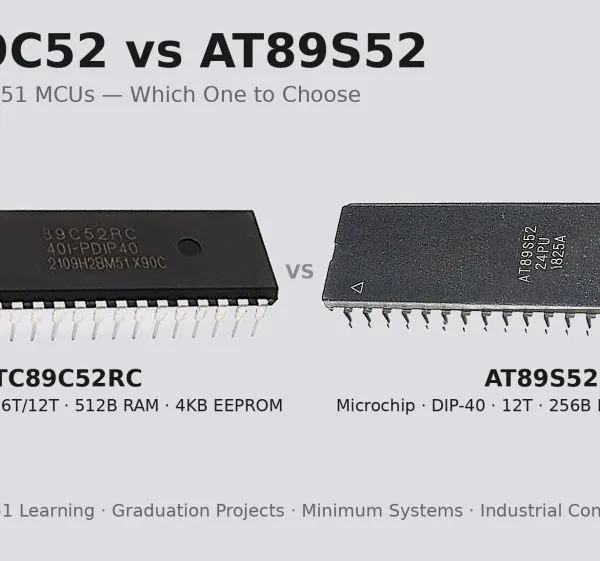 Read More

Contact Us
Recommended Products
-
 TPS4H160BQPWPRQ1 Original TI Automotive Quad-Channel 160mOhm Smart High-Side Switch HTSSOP-28NegotiableMOQ: 100 Units
-
DRV8889QWRGERQ1 Original TI Automotive Stepper Motor Driver 2.4A 45V VQFN-24NegotiableMOQ: 100 Units
-
TPS7B6933QDCYRQ1 Original TI Automotive 3.3V 150mA 40V LDO Linear Regulator SOT-223NegotiableMOQ: 100 Units
-
INA226AQDGSRQ1 Original TI Automotive 36V 16-Bit I2C Current Power Monitor VSSOP-10NegotiableMOQ: 100 Units
-
TPS7A6650QDGNRQ1 Original TI Automotive 150mA 40V LDO Linear Regulator 5V Fixed Output HVSSOP-8NegotiableMOQ: 100 Units
-
Microchip PIC18F4550-I/P 8-Bit MCU 48MHz 32KB Flash USB 2.0 DIP-40NegotiableMOQ: 100 Units
-
Espressif ESP32-C3 RISC-V WiFi Bluetooth LE Microcontroller 160MHz 400KB SRAM QFN-32NegotiableMOQ: 100 Units
-
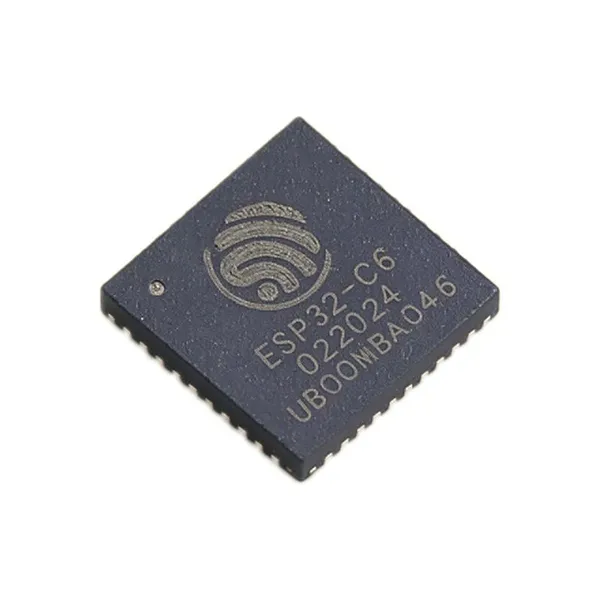
ESP32-C6 RISC-V WiFi 6 + Bluetooth 5.3 LE + Zigbee/Thread SoC 160MHz 512KB SRAM QFN-40 IoT Smart HomeNegotiableMOQ: 100 Units
-
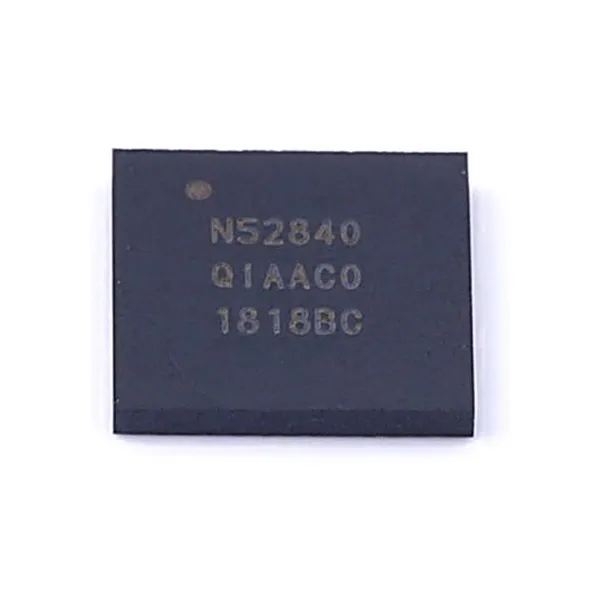
NRF52840 Nordic Bluetooth 5.3 SoC Cortex-M4F 64MHz 1MB Flash 256KB RAM AQFN-73NegotiableMOQ: 100 Units
-
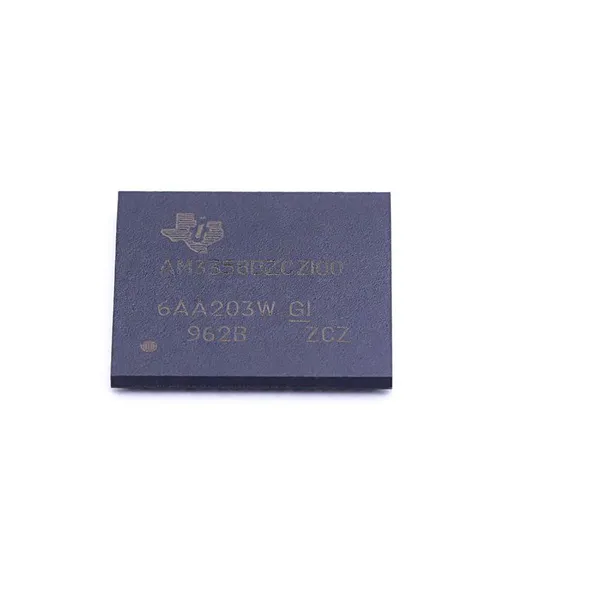
AM3358 TI Sitara AM3358BZCZ100 ARM Cortex-A8 Processor 1GHz BGA-324NegotiableMOQ: 100 Units
-
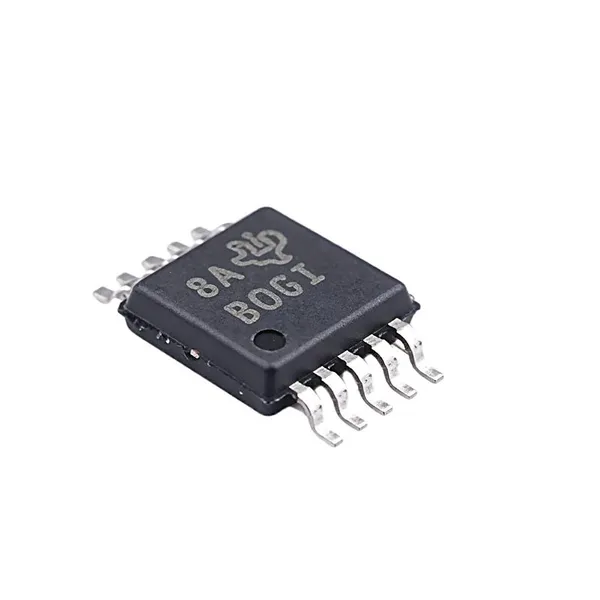
ADS1115 Texas Instruments ADS1115IDGSR 16-Bit ADC 860 SPS PGA I2C VSSOP-10NegotiableMOQ: 100 Units
-
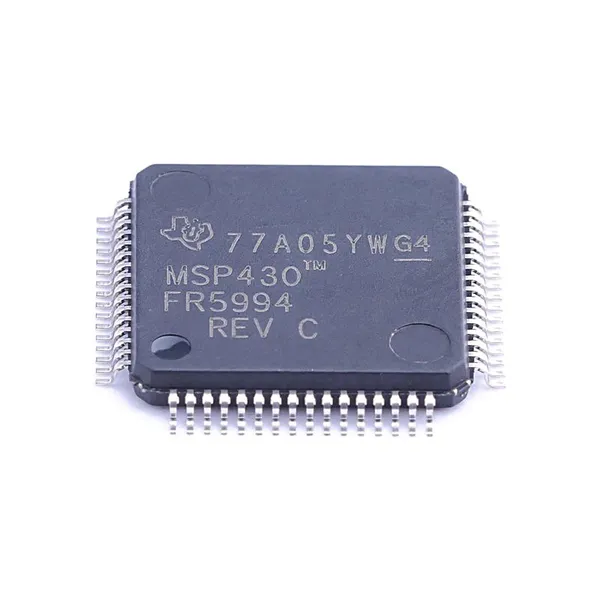
MSP430FR5994 TI MSP430FR5994IPM Ultra-Low-Power MCU 16MHz 256KB FRAM LEA LQFP-64NegotiableMOQ: 100 Units
-
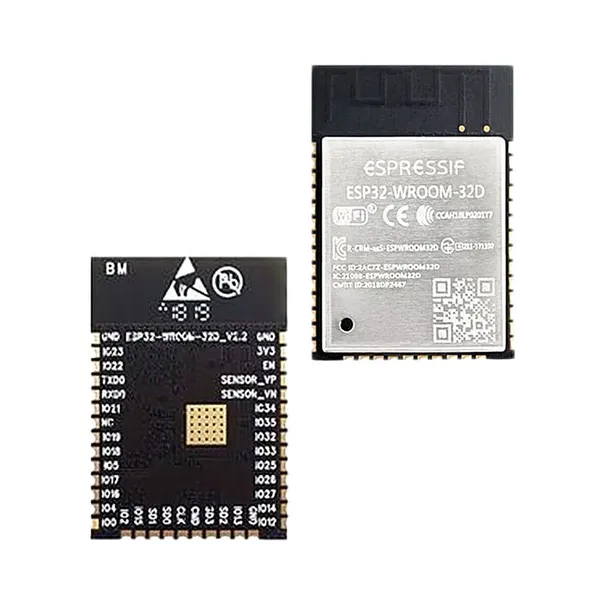
Espressif ESP32-WROOM-32D WiFi Bluetooth Module Dual-Core 240MHz 4MB Flash PCB Antenna IoTNegotiableMOQ: 100 Units
-
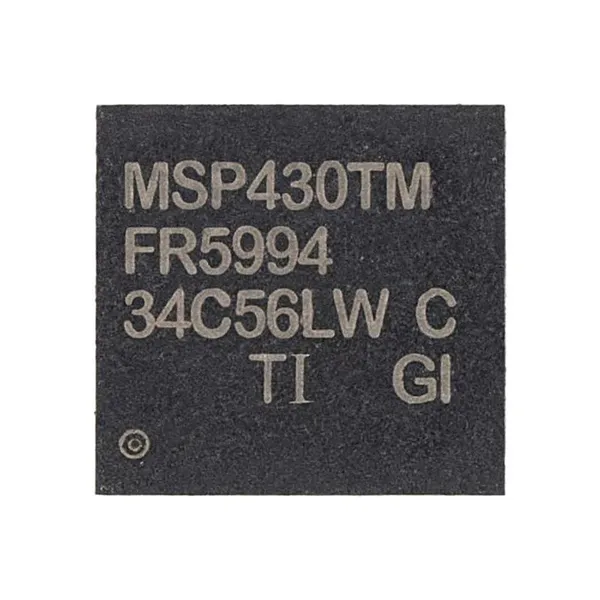
MSP430FR5994 TI MSP430FR5994IRGC Ultra-Low-Power MCU 16MHz 256KB FRAM LEA VQFN-64NegotiableMOQ: 100 Units
-
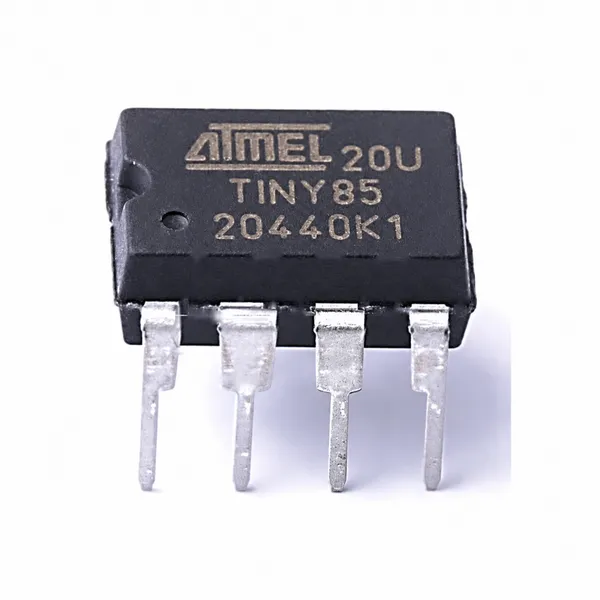
ATtiny85-20PU 8-Bit AVR Microcontroller 20MHz 8KB Flash 512B SRAM DIP-8NegotiableMOQ: 100 Units
-
Microchip ATmega2560-16AU AVR 8-Bit MCU 16MHz 256KB Flash 8KB SRAM TQFP-100NegotiableMOQ: 100 Units
-
Nordic Semiconductor NRF52832-QFAA Bluetooth 5 SoC ARM Cortex-M4F 64MHz 512KB Flash 64KB RAM QFN-48NegotiableMOQ: 100 Units
-
ATmega32U4-AU Microchip 8-Bit AVR MCU 16MHz 32KB Flash 2.5KB SRAM USB TQFP-44NegotiableMOQ: 100 Units
-
Microchip PIC16F877A-I/P 8-bit PIC MCU 20MHz 14KB Flash 368B RAM DIP-40NegotiableMOQ: 100 Units
-
STMicroelectronics STM32F103C8T6 ARM Cortex-M3 MCU 72MHz 64KB Flash 20KB SRAM LQFP-48NegotiableMOQ: 100 Units